 By DSP Staff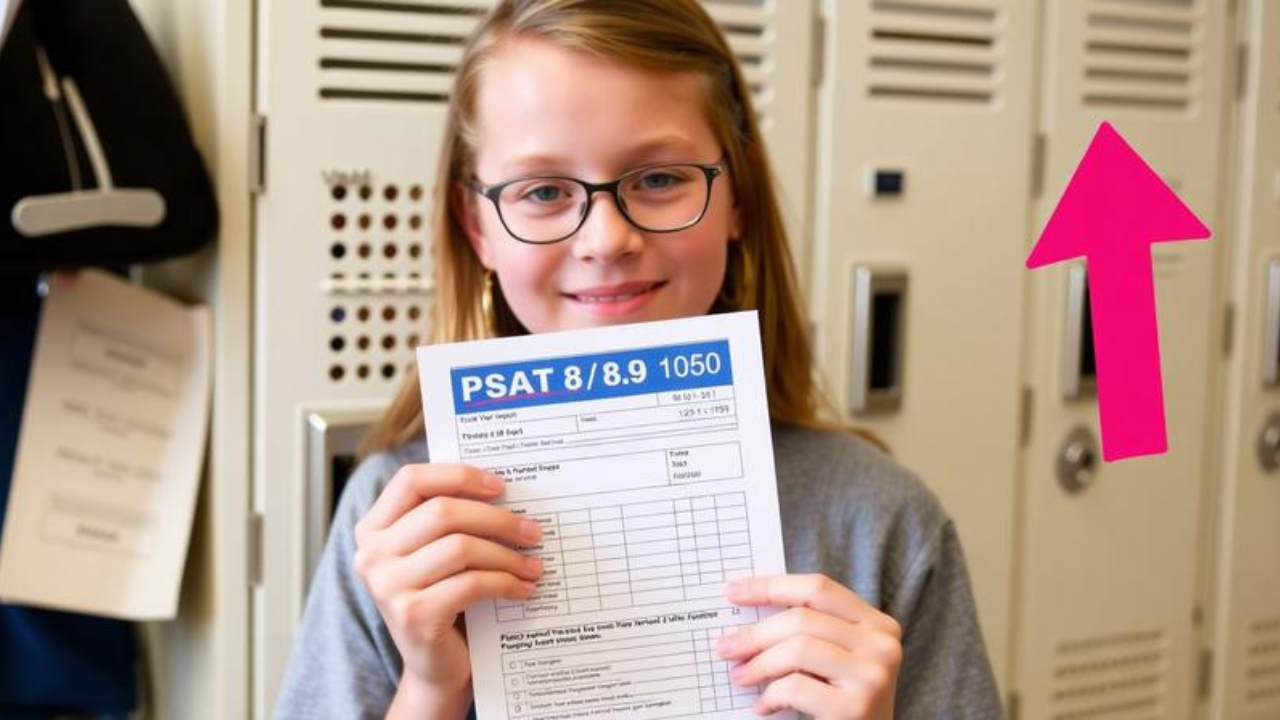
You’re a freshman, maybe 14 or 15, and you just took your first PSAT. The score stares back at you — 1020, 880, or perhaps 1150. Immediately, one question crowds out every other thought: what is a good PSAT score for a freshman? You’ve come to the right place. This guide cuts through the confusion and gives you honest, data-backed answers for the 2026 testing year. You’ll learn exactly how the PSAT 8/9 scoring works, what percentile your score lands in, why it matters (and why it doesn’t), and the exact steps to turn today’s number into future SAT success. No pressure, no fluff — just the clarity you need to make smart decisions right now.
Table of Contents
-
What Is a Good PSAT Score for a Freshman?
-
Why Does Your Freshman PSAT Score Matter?
-
Good PSAT Scores for Freshmen — Key Facts, Ranges, and Benchmarks
-
How To Get a Good PSAT Score as a Freshman
-
Common Myths About Freshman PSAT Scores
-
Expert Tips to Maximize Your 9th Grade PSAT Score
-
Frequently Asked Questions
-
Conclusion
What Is a Good PSAT Score for a Freshman?
The PSAT you take as a freshman is officially called the PSAT 8/9. It’s designed specifically for 8th and 9th graders and uses a total score scale of 240 to 1440. A good score means you are ahead of most of your peers and have a solid foundation for high school. For a 9th grader, a good PSAT score usually lands between 1000 and 1100. This range puts you near the 80th percentile or higher, meaning you outscored about 80% of other freshmen. A score of 1150 and above is excellent — you’re performing in the top 10% nationally. Scores around 850–900 are average, which is perfectly fine and a normal starting point.
Think of this test as a pre-season scrimmage. Your score simply shows what skills you’ve already built and where you can grow. It gives you a map, not a final verdict. The real goal is improvement, and you have three full years to get there.
Why Does Your Freshman PSAT Score Matter?
Your 9th grade score delivers value that goes far beyond a single number. Here’s exactly why it deserves your attention.
-
It sets your earliest SAT baseline. The PSAT 8/9 projects how you’d likely perform on the SAT, giving you a starting line three years before college applications. You can begin improvement now, not in a last-minute panic junior year.
-
It reveals skill gaps while you still have time. Your score report shows exactly which subskills — like algebra or command of evidence — need work. This early detection lets you fix small problems before they become big ones.
-
It guides your high school course planning. The College Board’s AP Potential tool uses your results to recommend AP classes where you’re likely to succeed, helping you choose a stronger schedule.
-
It builds test-taking confidence. Simply sitting for a timed, digital exam as a freshman makes future tests feel less intimidating. You’ll know the format, the tools, and the pacing.
-
It plants the seed for scholarships. While you can’t qualify for National Merit now, seeing your Selection Index teaches you what the competition requires, so you’ll be ready when it counts.
The College Board reports that students who take the PSAT 8/9 and then complete at least 6 hours of personalized practice on Official SAT Prep raise their later SAT scores by an average of 55 points. Your early effort compounds.
Good PSAT Scores for Freshmen — Key Facts, Ranges, and Benchmarks
Understand exactly how your 9th grade score stacks up in 2026. These facts center on the PSAT 8/9, the standard test for freshmen.
PSAT 8/9 Score Scale and Structure
The test divides into two sections: Evidence-Based Reading & Writing (EBRW) and Math, each scored between 120 and 720. Your total score is the sum of these two. The College Board also provides color-coded benchmarks: green means you’re on track for college readiness, yellow means you’re approaching the target, and red signals areas needing focus. For 9th graders, hitting the green benchmark usually requires section scores near 410–430 in EBRW and 430–450 in Math, which translates to a total score around 840–880.
Percentiles and Performance Tiers
Percentiles compare you to other freshmen who took the same test. The user group percentile is the most useful number. An 1100 total score places you near the 88th percentile, which means you outperform 88 out of every 100 test-takers. The table below breaks down what different ranges mean for a 9th grader.
| PSAT 8/9 Score Range | Approx. Percentile | Rating | What It Means |
|---|---|---|---|
| 1150–1440 | 92nd–99th+ | Exceptional | Top 8% nationally; strong readiness for advanced coursework and a high future SAT trajectory. |
| 1050–1140 | 80th–90th | Good | Solidly above average; you meet or exceed college readiness benchmarks across most areas. |
| 920–1040 | 55th–79th | Above Average | Above the national mean; clear strengths exist, but targeted practice will close noticeable gaps. |
| 800–910 | 35th–54th | Average | Right in the middle of your peer group; normal starting point with plenty of room to grow. |
| Below 800 | Below 35th | Needs Improvement | Foundational skill gaps require a structured, long-term plan; early intervention is key. |
What About National Merit?
The National Merit Scholarship competition uses only the PSAT/NMSQT taken in 11th grade. Your freshman score — whether from the PSAT 8/9 or even if you took the PSAT/NMSQT early — does not count. No scholarship is on the line right now, which makes this test truly low-stakes. What is a good PSAT score for a sophomore
How To Get a Good PSAT Score as a Freshman
Building a strong 9th grade score comes down to smart habits, not exhausting prep. Follow these six steps.
-
Analyze your score report thoroughly. Log into your College Board account and open the detailed skills breakdown. Look at every subscore flagged yellow or red. You’ll see exactly which question types tripped you up — words in context, standard English conventions, problem-solving. This turns a vague number into a personal study guide.
-
Set a specific, long-term growth goal. Write down a target like “Move from 980 to 1100 by my sophomore PSAT.” A concrete goal keeps you motivated, and the long timeline removes pressure. Remember, you’re not racing against juniors — you’re racing against your own last score.
-
Fix skill gaps with short, focused sessions.
-
If your report shows weakness in algebra, spend 20 minutes three times a week on that exact topic using Official Digital SAT Prep on Khan Academy. Don’t drown in full practice tests. Master one skill, then move to the next.
-
Read actively for 15 minutes every day. Choose science articles, historical documents, or editorials — not just fiction. After each paragraph, ask yourself: What’s the main claim? What evidence supports it? This builds the exact skill the EBRW section measures. It’s the single highest-impact habit for long-term growth.
-
Practice with the real digital tools. Download the Bluebook testing app and complete at least one full-length PSAT 8/9 practice test there. Learn to use the embedded Desmos graphing calculator, the annotation tool, and the flag-for-review feature. Comfort with the platform eliminates test-day surprises.
-
Start a simple error log. Every time you miss a practice question, write down the question type, your wrong answer, the correct answer, and — this is the gold — why you got it wrong. Review the log weekly. Patterns will jump out, and your brain will stop repeating the same mistakes.
Common Myths About Freshman PSAT Scores
Don’t let these false beliefs mess with your motivation or your plan.
-
Myth: “My freshman PSAT score predicts my final SAT score.”
Truth: It’s a starting point, not a prophecy. A 2024 College Board study found that 9th graders who used personalized practice improved their SAT scores by an average of 110 points by junior year. You will learn so much between now and then. -
Myth: “Only a score above 1200 is good for a freshman.”
Truth: A 1200 on the PSAT 8/9 puts you above the 95th percentile — it’s exceptional, not just good. A score of 1020 already outpaces most freshmen. Don’t let elite score chatter online distort what “good” actually means. -
Myth: “I should study for months to ace the PSAT 8/9.”
Truth: The PSAT 8/9 is meant to be a diagnostic snapshot. Cramming steals time from grades, activities, and sleep. A few weeks of light, targeted review and solid schoolwork will serve you far better than burnout. -
Myth: “National Merit is the only reason to care about the PSAT.”
Truth: National Merit is a junior-year goal. The freshman test’s value lies in early guidance, AP course recommendations, and a stress-free introduction to high-stakes testing. Those benefits shape your entire high school path. -
Myth: “Colleges see my freshman PSAT score.”
Truth: Colleges never receive your PSAT 8/9 scores. These results stay between you, your school, and the College Board. The only scores that go to colleges are the SAT or ACT scores you choose to send.
Expert Tips to Maximize Your 9th Grade PSAT Score
-
Master the digital interface now — complete every practice test inside the Bluebook app so the tools feel like second nature on test day.
-
Build mental math speed by practicing without a calculator for ten minutes daily; quick arithmetic frees up time for harder problems.
-
Learn grammar as a set of rules, not just by ear — focus on the most-tested errors like comma splices and pronoun agreement.
-
Sleep at least 8 hours the full week before the test — consistent rest improves processing speed far more than one good night.
-
Ask your counselor about the AP Potential report tied to your score; it can reveal strengths you didn’t know you had for advanced classes.
Frequently Asked Questions
What is a good PSAT 8/9 score for a 9th grader?
A good PSAT 8/9 score for a freshman falls between 1000 and 1100, which lands near the 80th to 88th percentile nationally. This means you outperformed roughly four out of five peers. Scores of 1150 and above are excellent and place you in the top 10%. Remember, “good” also means a score that shows growth over time — any number that rises year after year is a win.
Do colleges see my freshman PSAT score?
No. Colleges do not receive your PSAT 8/9 or PSAT/NMSQT scores from freshman year. These scores remain completely private between you, your school, and the College Board. Only the SAT or ACT scores you officially submit during applications ever reach colleges. Your 9th grade PSAT is a risk-free practice tool.
Can I qualify for National Merit as a freshman?
No. The National Merit Scholarship Program only considers the PSAT/NMSQT you take during your junior year of high school. Your freshman PSAT score — whether from the PSAT 8/9 or an early PSAT/NMSQT — cannot be used to qualify for recognition or scholarships. Use it solely as a diagnostic to build toward that later opportunity.
Conclusion
Your freshman PSAT score is simply your first data point on a long and promising path. A 1000–1100 is good, an 1150+ is excellent, and anything lower is simply a clear signal of where to focus next. The three truths to carry forward: this score is private, it’s meant to guide not define you, and small consistent habits now will produce big gains by junior year. Open your College Board account today, review your score report, and commit to one skill you’ll improve this week. What’s your target for sophomore year, and what skill are you tackling first? Drop your plan in the comments.