 By DSP Staff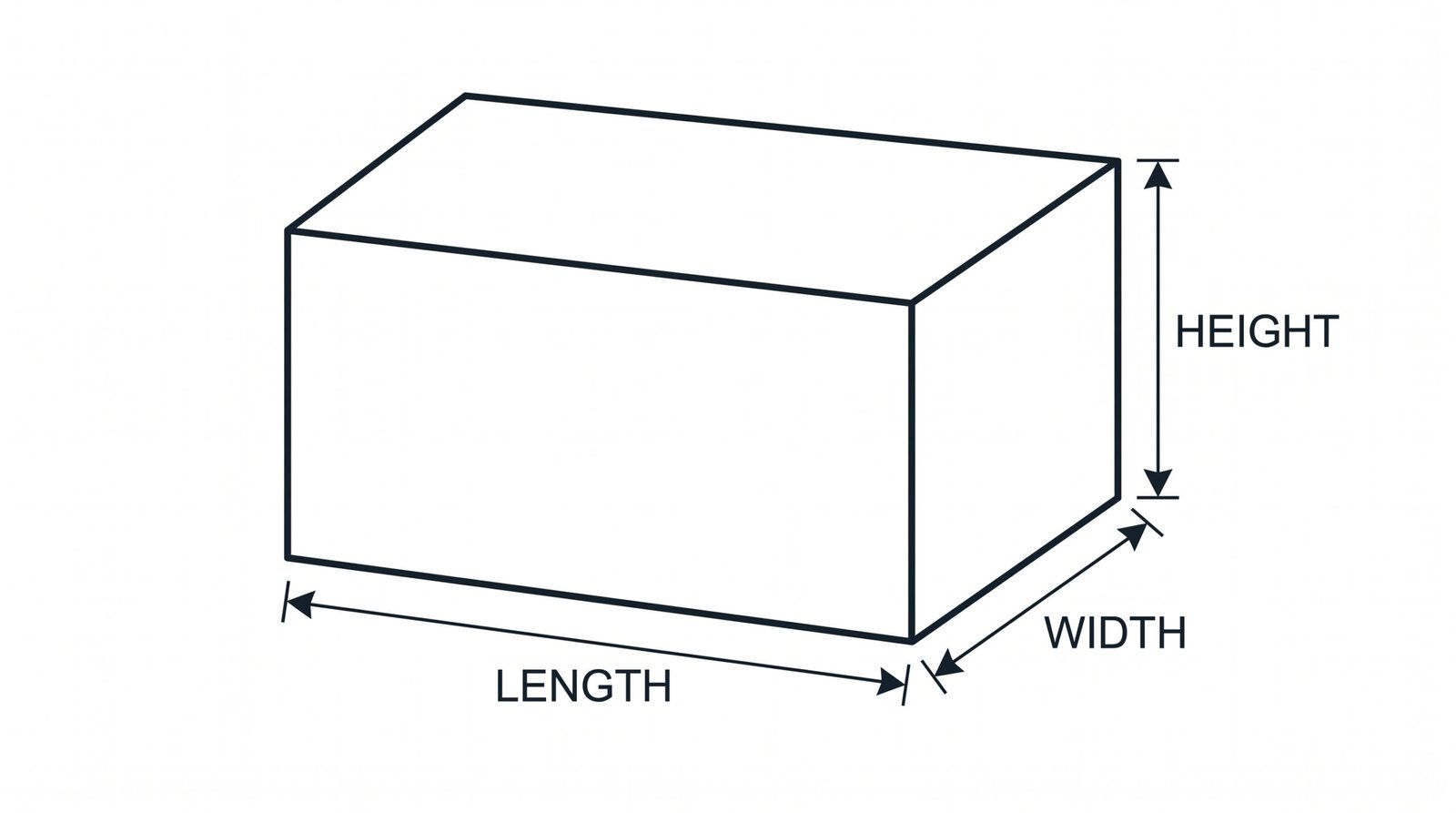
If you are a teacher planning your geometry unit, a homeschool parent looking for extra practice material, or a student trying to master 3D shapes, you have landed in exactly the right place.
This page gives you everything you need to understand, teach, and practice the volume of a rectangular prism — including free, printable worksheets for Grades 4 through 7, complete with step-by-step examples, solved problems, word problems, and a full answer key.
No sign-up. No paywall. No ads cluttering your worksheet. Just clean, educator-approved, curriculum-aligned practice — ready to print or assign digitally today.
Let’s dive in.
What Is a Rectangular Prism?
A rectangular prism is a three-dimensional solid shape where all six faces are rectangles. You interact with rectangular prisms every single day — cereal boxes, bricks, books, aquariums, and shipping containers are all real-world examples.
It is sometimes called a cuboid or a box shape. Unlike a cube (where all sides are equal), a rectangular prism can have different length, width, and height measurements.
Key Parts: Length, Width, and Height
To calculate the volume, students must identify three measurements:
- Length (l): The longest horizontal dimension
- Width (w): The shorter horizontal dimension (the depth)
- Height (h): How tall the prism stands vertically
📌 Teacher Tip: Use a physical shoebox in class. Have students measure each side with a ruler before plugging values into the formula. Hands-on learning dramatically improves retention.
How Is a Rectangular Prism Different from a Cube?
| Feature | Rectangular Prism | Cube |
|---|---|---|
| Face shape | All rectangles | All squares |
| Side lengths | Can all be different | All equal |
| Formula | V = l × w × h | V = s³ |
| Example | Cereal box | Rubik’s Cube |
A cube is actually a special type of rectangular prism — one where all three dimensions happen to be equal.
The Volume of a Rectangular Prism Formula
V = l × w × h Explained Simply
The most commonly used formula is:
V=l×w×h
Where:
- V = Volume (measured in cubic units, e.g., cm³, in³, ft³)
- l = Length
- w = Width
- h = Height
In plain language: multiply the three dimensions together. The result tells you how many unit cubes would fit inside the prism without gaps.
🔑 Key Concept: Volume is always expressed in cubic units (³). If you measure in centimeters, your answer is in cm³. If you measure in inches, your answer is in in³. Many students lose points simply by forgetting this label.
V = B × h (Base Area Method)
An alternative formula that students encounter in Grade 6 and 7:
V=B×h
Where B = base area = l × w
This formula is especially useful when the base area is already given in the problem, rather than the individual length and width measurements.
Example:
A rectangular prism has a base area of 24 cm² and a height of 5 cm. V = 24 × 5 = 120 cm³
Which Formula Should Students Use?
| Situation | Best Formula |
|---|---|
| Length, width, and height are all given | V = l × w × h |
| Base area and height are given | V = B × h |
| Finding a missing side when volume is known | Rearrange: h = V ÷ (l × w) |
Both formulas are correct and produce the same result — teach students to recognize which information the problem provides and select accordingly.
How to Calculate Volume – Step-by-Step Examples
Example 1 – Whole Numbers (Beginner Level)
Problem: A rectangular prism has a length of 6 cm, a width of 4 cm, and a height of 3 cm. What is the volume?
Step 1: Write the formula. V=l×w×h
Step 2: Plug in the values. V=6×4×3
Step 3: Multiply. V=72 cm3
Answer: 72 cm³
Example 2 – Decimal Dimensions (Intermediate Level)
Problem: A fish tank measures 12.5 inches long, 6.5 inches wide, and 8 inches tall. What is its volume?
Step 1: V = l × w × h Step 2: V = 12.5 × 6.5 × 8 Step 3: V = 12.5 × 6.5 = 81.25 → 81.25 × 8 = 650 in³
Answer: 650 in³
💡 Tip: Multiply two numbers first, then multiply the result by the third. This reduces errors with decimals.
Example 3 – Fractional Side Lengths (Advanced Level)
Problem: A rectangular prism has a length of 2½ ft, a width of 1¾ ft, and a height of 3 ft.
Step 1: Convert mixed numbers to improper fractions.
- 2½ = 5/2
- 1¾ = 7/4
Step 2: Multiply. V=52×74×3=5×7×32×4=1058=13.125 ft3
Answer: 13⅛ ft³ or 13.125 ft³
Example 4 – Finding a Missing Dimension (Given Volume)
Problem: A rectangular prism has a volume of 360 cm³. Its length is 12 cm and its width is 5 cm. What is its height?
Step 1: Rearrange the formula. h=Vl×w
Step 2: Substitute. h=36012×5=36060=6 cm
Answer: Height = 6 cm
Example 5 – Real-World Word Problem
Problem: Marcus is packing books into a rectangular cardboard box. The box is 18 inches long, 12 inches wide, and 10 inches tall. How many cubic inches of space does the box hold?
Step 1: V = 18 × 12 × 10 Step 2: V = 216 × 10 = 2,160 in³
Answer: The box holds 2,160 in³ of space.
Free Volume of Rectangular Prism Worksheets (Printable PDFs)
Below are four grade-differentiated worksheets. Each one is print-ready and includes an answer key.
📄 Grade 4 Worksheet – Whole Numbers (Beginner)
Standards Aligned: CCSS 4.MD.A.3 | TEKS 4.5D
Instructions: Find the volume of each rectangular prism using V = l × w × h. All measurements are whole numbers.
Problem Set A – Find the Volume
| # | Length | Width | Height | Volume |
|---|---|---|---|---|
| 1 | 5 cm | 3 cm | 2 cm | _______ |
| 2 | 8 in | 4 in | 6 in | _______ |
| 3 | 10 ft | 5 ft | 3 ft | _______ |
| 4 | 7 m | 7 m | 4 m | _______ |
| 5 | 9 cm | 2 cm | 11 cm | _______ |
| 6 | 15 in | 3 in | 5 in | _______ |
| 7 | 6 ft | 6 ft | 6 ft | _______ |
| 8 | 12 m | 4 m | 2 m | _______ |
Problem Set B – Label the Dimensions
(Diagrams of rectangular prisms with l, w, h labeled and values provided — students write the volume)
- A rectangular prism with l = 4 cm, w = 3 cm, h = 9 cm. Volume = _______
- A prism where all sides equal 5 inches. Volume = _______
- A prism with l = 20 ft, w = 1 ft, h = 3 ft. Volume = _______
✅ Answer Key – Grade 4 Worksheet
| # | Answer |
|---|---|
| 1 | 30 cm³ |
| 2 | 192 in³ |
| 3 | 150 ft³ |
| 4 | 196 m³ |
| 5 | 198 cm³ |
| 6 | 225 in³ |
| 7 | 216 ft³ |
| 8 | 96 m³ |
| B1 | 108 cm³ |
| B2 | 125 in³ |
| B3 | 60 ft³ |
📄 Grade 5 Worksheet – Integers & Unit Cubes
Standards Aligned: CCSS 5.MD.C.3 | 5.MD.C.4 | 5.MD.C.5
Section 1 – Count the Unit Cubes
(Diagrams showing rectangular prisms packed with unit cubes. Students count layers.)
- A prism packed with unit cubes: 3 rows, 4 columns, 2 layers. Volume = _______ cubic units
- A prism: 5 rows, 5 columns, 3 layers. Volume = _______ cubic units
- A prism: 6 rows, 2 columns, 4 layers. Volume = _______ cubic units
Section 2 – Apply the Formula
| # | Length | Width | Height | Volume |
|---|---|---|---|---|
| 1 | 14 cm | 6 cm | 9 cm | _______ |
| 2 | 25 ft | 8 ft | 4 ft | _______ |
| 3 | 30 m | 12 m | 5 m | _______ |
| 4 | 18 in | 18 in | 3 in | _______ |
| 5 | 22 cm | 11 cm | 7 cm | _______ |
Section 3 – Missing Dimension Problems
- Volume = 240 cm³, l = 10 cm, w = 4 cm → h = _______
- Volume = 500 ft³, l = 25 ft, h = 4 ft → w = _______
- Volume = 1,620 m³, w = 9 m, h = 6 m → l = _______
✅ Answer Key – Grade 5 Worksheet
| Answer | |
|---|---|
| Cubes 1 | 24 cubic units |
| Cubes 2 | 75 cubic units |
| Cubes 3 | 48 cubic units |
| Formula 1 | 756 cm³ |
| Formula 2 | 800 ft³ |
| Formula 3 | 1,800 m³ |
| Formula 4 | 972 in³ |
| Formula 5 | 1,694 cm³ |
| Missing 1 | 6 cm |
| Missing 2 | 5 ft |
| Missing 3 | 30 m |
📄 Grade 6 Worksheet – Decimals & Fractions
Standards Aligned: CCSS 6.G.A.2 | TEKS 6.8D
Section 1 – Decimal Dimensions
| # | Length | Width | Height | Volume |
|---|---|---|---|---|
| 1 | 4.5 cm | 3.2 cm | 2.0 cm | _______ |
| 2 | 7.5 in | 6.4 in | 5.0 in | _______ |
| 3 | 12.5 m | 4.0 m | 3.2 m | _______ |
| 4 | 9.6 ft | 2.5 ft | 8.0 ft | _______ |
| 5 | 11.2 cm | 5.5 cm | 4.5 cm | _______ |
Section 2 – Fractional Side Lengths
(Convert mixed numbers to improper fractions before solving)
| # | Length | Width | Height | Volume |
|---|---|---|---|---|
| 1 | 3½ ft | 2 ft | 4 ft | _______ |
| 2 | 2¼ m | 3 m | 2½ m | _______ |
| 3 | 5⅓ in | 3 in | 1½ in | _______ |
| 4 | 4¾ cm | 2 cm | 6 cm | _______ |
Section 3 – Base Area Given
- Base Area = 36.5 cm², Height = 8 cm → V = _______
- Base Area = 52.25 ft², Height = 4 ft → V = _______
- Base Area = 18¾ in², Height = 5 in → V = _______
✅ Answer Key – Grade 6 Worksheet
| Answer | |
|---|---|
| Decimal 1 | 28.8 cm³ |
| Decimal 2 | 240 in³ |
| Decimal 3 | 160 m³ |
| Decimal 4 | 192 ft³ |
| Decimal 5 | 277.2 cm³ |
| Fraction 1 | 28 ft³ |
| Fraction 2 | 16⅞ m³ |
| Fraction 3 | 24 in³ |
| Fraction 4 | 57 cm³ |
| Base Area 1 | 292 cm³ |
| Base Area 2 | 209 ft³ |
| Base Area 3 | 93¾ in³ |
📄 Grade 7 Worksheet – Word Problems & Mixed Review
Standards Aligned: CCSS 7.G.B.6 | TEKS 7.9A
Word Problem Set – Real World Applications
Problem 1: Sarah is filling a rectangular aquarium with water. The tank is 24 inches long, 12 inches wide, and 16 inches tall. What is the maximum volume of water the tank can hold?
Problem 2: A warehouse stores boxes in a space that is 40 feet long, 20 feet wide, and 15 feet high. Each box has a volume of 8 cubic feet. How many boxes can the warehouse hold?
Problem 3: A concrete slab for a patio is 12.5 meters long, 8 meters wide, and 0.25 meters thick. What is the volume of concrete needed?
Problem 4: Two rectangular fish tanks are placed side by side. Tank A is 30 cm × 20 cm × 25 cm. Tank B is 40 cm × 15 cm × 20 cm. Which tank holds more water, and by how much?
Problem 5: A rectangular prism has a volume of 1,440 cubic inches. Its base is a square with side length 12 inches. What is the height?
Problem 6 (Challenge): A storage room is 15 feet long, 10 feet wide, and 9 feet high. A large box takes up ⅓ of the room’s volume. What is the volume of the large box?
✅ Answer Key – Grade 7 Word Problems
| Problem | Answer |
|---|---|
| 1 | 4,608 in³ |
| 2 | Space = 12,000 ft³; Boxes = 1,500 boxes |
| 3 | 25 m³ |
| 4 | Tank A = 15,000 cm³; Tank B = 12,000 cm³; Tank A holds 3,000 cm³ more |
| 5 | h = 10 inches |
| 6 | 450 ft³ |
Volume of Rectangular Prism – Word Problems
Word problems are where many students hit a wall. The math itself is simple — the challenge is translating the real-world scenario into a formula.
Tips for Solving Volume Word Problems
Use this 4-step framework and teach it explicitly:
Step 1 – Read and Underline Read the problem twice. Underline every number and the unit of measurement.
Step 2 – Identify the Shape Confirm it is a rectangular prism (box, tank, room, crate, container, brick, etc.).
Step 3 – Write the Formula First Before plugging in numbers, always write: V = l × w × h
Step 4 – Solve and Label Calculate, then make sure your answer includes cubic units (cm³, in³, ft³, m³).
🧠 Memory Trick for Students: “Volume fills the WHOLE thing — so use ALL THREE measurements.”
Common Mistakes Students Make (And How to Fix Them)
Mistake #1 – Confusing Volume with Surface Area
| Volume | Surface Area | |
|---|---|---|
| What it measures | Space INSIDE the shape | Area of all OUTER faces |
| Formula | V = l × w × h | SA = 2(lw + lh + wh) |
| Units | Cubic (cm³) | Square (cm²) |
| Think of it as | How much it holds | How much wrapping paper you need |
Fix: Teach students to ask, “Am I finding what’s INSIDE or what’s OUTSIDE?”
Mistake #2 – Forgetting to Label Cubic Units
A volume answer without units is an incomplete answer and will lose points on tests.
Fix: Make “label your units” the last step of every problem — write it on a sticky note on their desk.
Mistake #3 – Multiplying Only Two Dimensions
Many students multiply only length × width (confusing it with area) and forget the height.
Fix: Draw a big “× 3 numbers” reminder at the top of every worksheet until it becomes habit.
How to Use These Worksheets in the Classroom
As Homework or Bell-Ringers
Print the Grade-appropriate worksheet and assign 5–8 problems as a homework set or as a warm-up activity at the start of your geometry lesson.
As Math Centers or Task Cards
Cut the problems into individual cards. Laminate them. Students rotate through stations solving one card at a time — excellent for kinesthetic learners.
For Test Prep and Assessment
The Grade 7 word problem set doubles as a quiz. Use it as a pre-assessment at the start of your unit and a post-assessment after instruction. Compare scores to measure growth.
For Differentiated Instruction
| Student Level | Recommended Worksheet |
|---|---|
| Struggling/Below Grade | Grade 4 (Whole Numbers) |
| On Grade Level | Grade 5 (Integers + Unit Cubes) |
| Advanced Learner | Grade 6–7 (Decimals/Fractions/Word Problems) |
| ELL Students | Grade 4 with diagram-only problems |
Frequently Asked Questions (FAQ)
Q1: What is the formula for the volume of a rectangular prism? The formula is V = l × w × h (Volume = Length × Width × Height). You can also use V = B × h where B is the base area (length × width).
Q2: What grade level are these worksheets designed for? These worksheets are designed for Grades 4 through 7. They progress from basic whole number problems (Grade 4) to decimal and fractional dimensions (Grade 6) and real-world word problems (Grade 7).
Q3: Are the worksheets free and printable? Yes — 100% free, no sign-up required, and fully printable. Each worksheet includes a complete answer key.
Q4: What is the difference between volume and surface area? Volume measures the 3D space inside a prism (in cubic units, like cm³). Surface area measures the total area of all outer faces (in square units, like cm²). Students frequently mix these two up — the worksheets in this guide include a dedicated section to address this.
Q5: How do I find the volume when one dimension is missing? Rearrange the formula. If volume, length, and width are known: h=Vl×w The Grade 5 and Grade 7 worksheets above include missing dimension practice problems.
Q6: What are cubic units and why do they matter? Cubic units (cm³, in³, ft³) describe 3D measurements. Because volume is three-dimensional, you always label your answer in cubic units. Omitting the unit label is one of the most common test-taking errors.
Q7: Can I use these worksheets for homeschooling? Absolutely. These worksheets align with Common Core State Standards (CCSS) and TEKS, making them suitable for homeschool families following either curriculum.
Q8: What is a composite rectangular prism? A composite rectangular prism is a shape made of two or more rectangular prisms joined together (like an L-shape). To find the volume, calculate each prism separately and add the results together.
Conclusion
Mastering the volume of a rectangular prism is one of the most foundational skills in middle school geometry — and it does not have to be complicated.
By understanding the formula V = l × w × h, working through examples from beginner to advanced, and getting consistent practice with the free worksheets on this page, every student can build real confidence with 3D measurement.
Whether you are a teacher preparing a unit plan, a parent supporting your child at home, or a student getting ready for a test — these worksheets are here for you, free and ready to use.