 By DSP Staff
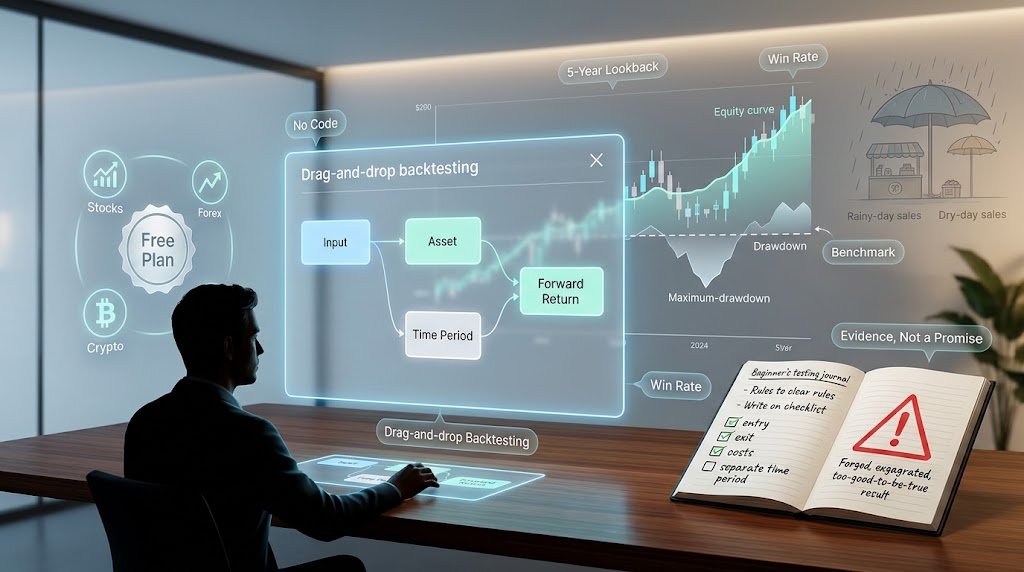
If you have ever wondered whether a strategy would have worked last year, this guide is for you. You will learn what Tradewell is, what its free plan includes, and how to run your first backtest step by step. We will also cover the common mistakes that make beginners trust results that are not reliable.
Nothing here is financial advice. Think of it as a practical map: what the tool does, where it fits, and how to use it without fooling yourself. By the end, you will know whether Tradewell suits your trading style and how to get your first result today.
Table of Contents
- What Is Tradewell?
- Why Does Tradewell Matter? Key Benefits
- Tradewell Key Facts and How It Works
- How to Backtest a Strategy with Tradewell
- Common Mistakes and Myths to Avoid
- Expert Tips for Best Results
- Frequently Asked Questions
What Is Tradewell?
Tradewell is a web-based backtesting and analytics platform. Traders use it to check whether an idea holds up against historical data before they commit money. According to the platform’s own description and third-party reviews, it covers stocks, forex, futures, and crypto.
Imagine you believe people buy more umbrellas on rainy days, and you want to test that before opening an umbrella shop. You would look at past sales records from rainy and dry days and compare them. Tradewell works in a similar way. It pulls historical data and shows you whether a relationship between two things, such as an asset and a factor that might influence its future returns, has held up over time.
Tradewell’s approach is a little different from many tools. A review from Day Trade Review notes that its backtester does not always test a complete, fully formed strategy. Instead, you can test a specific relationship, such as the rate of change of the RSI indicator rather than the RSI itself. That design rewards curiosity, but it also means you should understand what you are testing before you start.
Why Does Tradewell Matter? Key Benefits
Backtesting has always been a tool for professionals, but Tradewell makes it accessible to everyday traders. Here is why it stands out:
- No coding required: You can set up tests through the interface instead of writing scripts. This saves hours if programming is not your strength.
- Free access to core tools: Reviews describe a free plan that includes backtesting with about five years of historical data. That is enough to test many ideas before you pay anything.
- Multiple asset classes: You can test stocks, forex, futures, and crypto from one platform rather than switching between tools.
- Built-in historical data: You do not need to find, clean, and import price data yourself, which removes a common beginner obstacle.
- Unusual datasets: One review notes that Tradewell includes alternative data, which can help you test ideas beyond price charts alone.
- Clearer thinking: Testing forces you to define entry rules, exit rules, and a time period, which makes your idea easier to judge honestly.
Tradewell Key Facts and How It Works
Tradewell’s features vary by plan, and the platform’s details change over time. Before you rely on any specific number, check the official website. The table below compares Tradewell with two other common ways traders test ideas.
| Feature | Tradewell | Spreadsheet Testing | Coded Backtester (e.g., Python) |
|---|---|---|---|
| Coding needed | No | No | Yes |
| Historical data | Built in | Manual import | You source and clean it |
| Free option | Yes, with limits | Yes | Usually free, but time-intensive |
| Learning curve | Low to moderate | Moderate | High |
| Best for | Beginners testing relationships | Simple, custom checks | Advanced, automated systems |
Data and Lookback Periods
Tradewell’s free plan offers a set lookback window, and reviews mention about five years of data. Paid plans reportedly offer longer historical periods and a larger metric library. Longer data helps you see how an idea behaved across different market conditions, such as calm years and sharp downturns. Short tests can make weak ideas look strong.
Metrics and Analysis
Good backtesting goes beyond a single profit number. Tradewell provides tools for data visualization and risk-reward analysis, according to its own description. Look at the win rate, the average gain versus average loss, and the maximum drawdown, which measures the largest drop from a peak. A strategy that earns money but has huge drawdowns may be hard to live with in practice.
Testing Relationships Versus Full Strategies
Because Tradewell focuses on relationships between two datasets, you should define your input (the factor you suspect matters) and your output (the asset’s forward return) clearly. This approach works well for testing one idea at a time. If you want to test a complete system with many rules, you may need a more flexible tool later.
How to Backtest a Strategy with Tradewell
Running your first test is simpler than it looks. Follow these steps to get a meaningful result.
- Write your idea in one sentence. For example: “When momentum rises sharply, the stock tends to keep rising over the next month.” A clear sentence keeps you focused and stops you from changing the rules after you see the results.
- Choose your asset and your input. Select the market you want to trade and the variable you believe affects its future returns. Start with one asset so your results are easier to interpret.
- Set your time period and check the data. Pick a date range that covers at least one market downturn if possible. Confirm that the data covers the period you expect, because short histories can mislead you.
- Run the backtest and record the results. Save the output before you make any changes. Note the win rate, average return, and drawdown. Writing these down prevents you from forgetting which version you tested.
- Test on a separate time period. Split your data into two parts. Build your idea on the first part, then check whether it still works on the second. If performance collapses on the new data, your idea may have been fitted to noise.
- Compare against a simple benchmark. Ask whether your idea beats simply holding the asset over the same period. If it does not, the strategy adds little value, no matter how good the chart looks.
Common Mistakes and Myths to Avoid
Many beginners get misleading results because of a few predictable errors. Watch out for these.
Myth: A good backtest guarantees future profits. Past performance does not promise future returns. Markets change, and a pattern that worked for five years can stop working in six months. Treat a backtest as evidence, not a promise.
Mistake: Testing too many ideas and keeping the winner. If you run fifty tests and keep the one that looks best, that result is likely luck. Decide your hypothesis first, then test it. Record every test you run so you can judge the full picture.
Mistake: Ignoring trading costs. Commissions, spreads, and slippage can turn a profitable backtest into a losing trade. Add realistic costs to your assumptions before you trust the numbers.
Mistake: Using too short a time period. A few months of data rarely shows how a strategy behaves in a crisis. Use the longest reliable history available, and check how the idea performs in different market conditions.
Myth: No-code means no thinking is required. Because the interface is simple, it is easy to click through tests without understanding them. You still need to define what you are testing and why it should work.
Expert Tips for Best Results
- Write your rules down before you open the tool. This single habit prevents most cases of unconscious curve-fitting.
- Keep a testing journal. Record each idea, the settings you used, and the result. Patterns in your own mistakes become clear over time.
- Start with simple relationships. One clear input and one clear output are easier to trust than complicated combinations.
- Check drawdowns, not just returns. A strategy you cannot stick with during losing periods will not help you in real trading.
- Confirm plan limits before you commit. Check the official site for the current free-plan lookback period and features, since these can change.
Frequently Asked Questions
Is Tradewell free to use?
Tradewell offers a free plan that includes backtesting tools with a limited historical data window, reviews mention about five years. Paid plans offer longer lookback periods and more metrics. Plan details change, so check the official Tradewell website for the current options before you sign up or pay for anything.
Does Tradewell require coding skills?
No. Tradewell is designed as a no-code platform, so you can set up and run tests through its interface. You still need a basic understanding of trading concepts such as entries, exits, and drawdowns to interpret your results correctly. Coding is not required to get started.
What is Tradewell’s revenue or valuation?
Tradewell’s revenue and valuation were not publicly disclosed in the sources reviewed for this article. Private companies often keep these figures confidential. For updates, check the company’s official website or reputable business news coverage, and be cautious of unverified claims from unofficial sites.
Conclusion
Here are the three most important points from this guide. First, Tradewell is a no-code platform that lets you test trading ideas against historical data across stocks, forex, futures, and crypto. Second, backtesting is most useful when you define your rules in advance, test on separate time periods, and include realistic costs. Third, a good backtest is evidence, not a guarantee, so always check drawdowns and compare results with a simple benchmark.
Start today by writing one trading idea in a single sentence. Then open the official Tradewell website, check the current free-plan details, and run your first test. You will learn more from one honest backtest than from a dozen guesses.
Which trading idea would you test first, and what do you expect the results to show? Share it in the comments below.