 By DSP Staff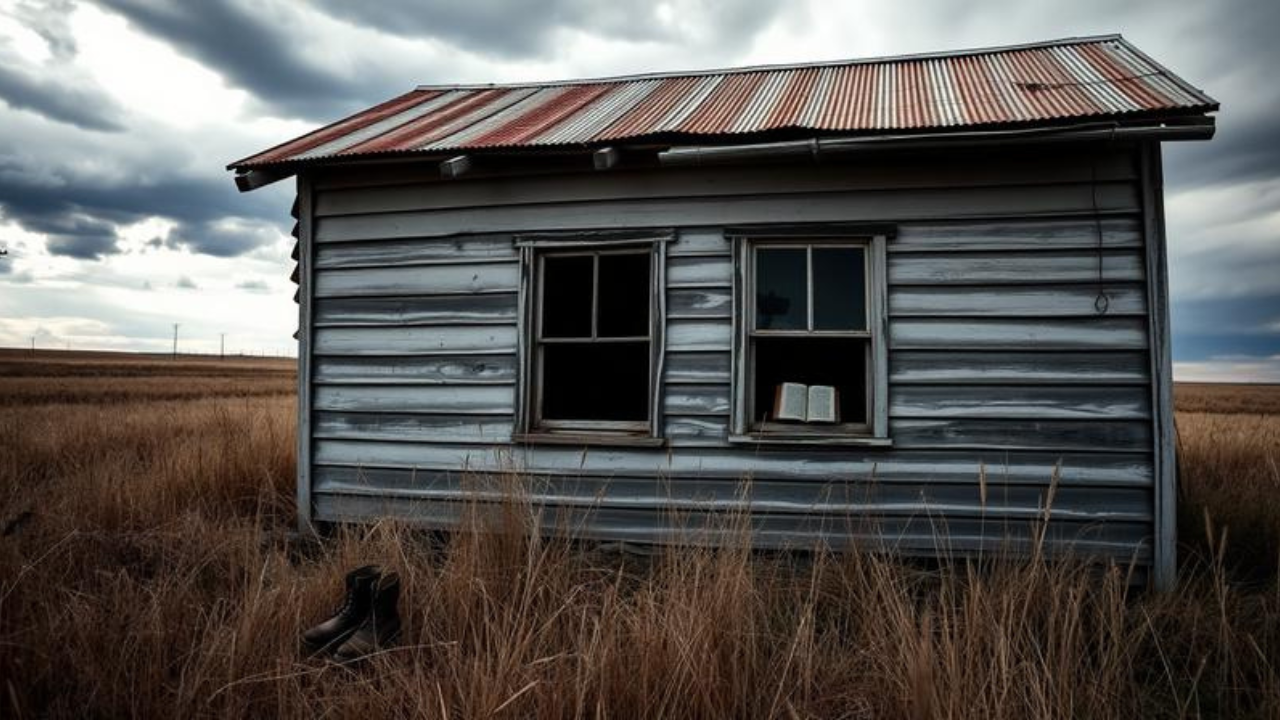
Introduction
Have you ever walked past an abandoned house and wondered about the lives that once filled its rooms? Who lived there? What happened to them? Why did they leave? Ted Kooser’s poem “Abandoned Farmhouse” transforms that universal curiosity into one of the most haunting and accessible poems in American literature. In just three stanzas and twenty-four lines, Kooser creates a complete world—a family rendered entirely through the objects they left behind.
The problem many readers face when encountering poetry is feeling that the meaning is locked behind obscure language or inaccessible references. “Abandoned Farmhouse” offers a different experience. It speaks in plain, clear language while delivering profound emotional impact.
This article delivers a comprehensive analysis of “Abandoned Farmhouse”—from its structure and literary devices to its themes and cultural context. Whether you are a student studying the poem, a teacher preparing a lesson, or simply a lover of poetry, you will come away with a deeper understanding of why this poem endures and what makes it a masterclass in the art of showing rather than telling.
What Is “Abandoned Farmhouse”?
“Abandoned Farmhouse” is an American poem by Pulitzer Prize-winning poet Ted Kooser. First published in 1980 as part of Kooser’s collection Sure Signs: New and Selected Poems, the poem has become one of the most widely studied and anthologized works in contemporary American poetry.
The poem consists of three stanzas, each containing eight lines. It is written in open verse—unrhymed free verse that does not follow a strict metrical pattern. Though it has no formal rhyme scheme, most of its lines include five stressed syllables, creating a rhythm that sounds like the natural iambic pentameter of conversational speech.
The Poem in Full
Before diving into analysis, let us read the poem as Kooser wrote it:
He was a big man, says the size of his shoes
on a pile of broken dishes by the house;
a tall man too, says the length of the bed
in an upstairs room; and a good, God-fearing man,
says the Bible with a broken back on the floor
below the window, dusty with sun; but not a man
for farming, say the fields cluttered with boulders
and the leaky barn.A woman lived with him, says the bedroom wall
papered with lilacs and the kitchen shelves
covered with oilcloth, and they had a child,
says the sandbox made from a tractor tire.
Money was scarce, say the jars of plum preserves
and canned tomatoes sealed in the cellar hole.
And the winters cold, say the rags in the window frames.
It was lonely here, says the narrow country road.Something went wrong, says the empty house
in the weed-choked yard. Stones in the fields say
he was not a farmer; the still-sealed jars
in the cellar say she left in a nervous haste.
And the child? Its toys are strewn in the yard
like branches after a storm—a rubber cow,
a rusty tractor with a broken plow, a doll
in overalls. Something went wrong, they say.
Narrative Perspective
The poem is narrated by an unnamed speaker who observes the abandoned farmhouse and its contents. The speaker never directly states what happened to the family. Instead, the objects themselves speak, each offering a piece of evidence that builds a portrait of the people who once lived there.
Written almost exclusively in the past tense, the poem shifts to the present tense in its final line—“Something went wrong, they say”—transforming the narrative from observation and inference into rumor. This subtle shift is one of the poem’s most powerful effects.
Why It Matters – Themes and Significance
“Abandoned Farmhouse” endures because it speaks to universal human experiences: failure, abandonment, mystery, and the impermanence of human life. The poem’s themes resonate across generations and cultures.
Theme of Failure
The central theme of “Abandoned Farmhouse” is that failure can be seen in a person’s actions long after they have left. The man is described as “not a man for farming,” and the evidence is everywhere—the fields “cluttered with boulders,” the “leaky barn”. His inability to farm successfully may have translated into an inability to provide for his family. The poet reinforces this with the line “Money was scarce”. This theme of failure is not presented as judgment but as quiet observation—the facts speak for themselves.
Theme of Abandonment
Abandonment pervades the poem on multiple levels. There is the physical abandonment of the house itself, described as “empty” in a “weed-choked yard”. But there is also a suggestion of emotional abandonment—that the family may have been disconnected or unhappy even while living together. The “weed-choked yard” implies neglect that began before anyone left.
Theme of Transience and Mortality
Through sensory descriptions and the examination of abandoned objects, the poem explores humanity’s fleeting and transient nature. The Bible with a “broken back” shows how humans have a temporary relationship with even sacred objects. The sandbox made from a tractor tire—a play area built from the tools of labor—represents how even the things we create for joy and life are ultimately abandoned. As one analysis observes, “even though at their core they are transient, the effect on their surroundings will be seen long after their own” existence.
Theme of Mystery
Perhaps the most powerful theme is mystery. The poem never tells us exactly what happened. We are left to piece together clues: broken dishes, a Bible on the floor, sealed jars indicating a hasty departure, toys scattered “like branches after a storm”. The repeated refrain “Something went wrong” becomes both an answer and a question. The poem invites readers to become detectives, spinning their own theories about the family’s fate.
Literary Devices – Step-by-Step Analysis
Kooser’s mastery lies in his use of simple, accessible language combined with sophisticated literary techniques. Let us examine the key devices that make this poem work.
Personification
Personification is the most prominent literary device in “Abandoned Farmhouse”. Throughout the poem, inanimate objects are given the power of speech: the shoes “say” he was a big man, the bed “says” he was tall, the Bible “says” he was God-fearing, the fields and barn “say” he was not a farmer.
This is not mere decoration. The personification serves a crucial narrative function: in the absence of the family themselves, the objects become the storytellers. The “jars of plum preserves” speak of scarce money, the “narrow country road” speaks of loneliness, and the “empty house” itself declares that “something went wrong”.
Kooser uses this device to create a unique point of view where the abandoned objects guide the reader through the deserted farmhouse, building a mood of eeriness and mystery.
Alliteration
Kooser employs alliteration to emphasize key characteristics and create musicality. Consider the hard *g* sound in “good, God-fearing man” and the soft *b* sound in “Bible with a broken back”. These repeated sounds place emphasis on the man’s religious devotion while simultaneously suggesting something is amiss—the Bible itself is broken. The alliteration in “says the size of his shoes” draws attention to the evidence of the man’s physical presence.
Imagery
The poem is rich with sensory imagery that allows readers to visualize the abandoned farmhouse. We can see the “pile of broken dishes,” the “Bible with a broken back,” the “bedroom wall papered with lilacs,” the “rags in the window frames,” and the child’s toys “strewn in the yard like branches after a storm”. These concrete images create a vivid, almost cinematic experience.
Form and Structure
The poem’s structure is carefully crafted. Each of the three eight-line stanzas focuses on a different family member—first the man, then the woman, then the child—before zooming out to the overall mystery.
The syntax follows a distinctive pattern, reminiscent of fairy tales or nursery rhymes: “He was a big man, says the size of his shoes” and “A woman lived with him, says the bedroom wall”. This repetitive structure becomes an effective organizing mechanism throughout the poem.
Kooser also uses enjambment—splitting phrases across line breaks—to create pauses and surprises.
Simile
The poem contains one striking simile: the child’s toys are “strewn in the yard like branches after a storm”. This comparison suggests violence, chaos, and sudden departure—as if a storm (literal or metaphorical) swept through the family’s life.
Common Mistakes to Avoid When Analyzing the Poem
Mistake 1: Assuming the Poem Provides Definitive Answers
Many readers approach “Abandoned Farmhouse” expecting to discover exactly what happened to the family. But the poem deliberately withholds a definitive explanation. It offers clues and possibilities but never resolution. The shift to present tense and rumor in the final line—“Something went wrong, they say”—emphasizes that we are left with speculation.
What to do instead: Embrace the ambiguity. The mystery is the point. Consider what could have happened—the Dust Bowl, the Great Depression, financial ruin, marital breakdown—but recognize that the poem’s power lies in what it does not tell us.
Mistake 2: Reading the Poem as Pure Autobiography
While Kooser was a Nebraskan poet familiar with rural life, “Abandoned Farmhouse” is not necessarily autobiographical. Kooser worked for many years as a life insurance executive and wrote poetry on the side.
What to do instead: Appreciate the poem as a crafted work of art that draws on regional experience but transcends it. Consider how Kooser’s background as a Midwesterner informs his attention to rural details while recognizing the poem’s universal themes.
Mistake 3: Overlooking the Child’s Significance
Some analyses focus heavily on the man and woman while treating the child as an afterthought. But the child’s presence is crucial. The sandbox “made from a tractor tire” shows a father making an effort for his child. The toys scattered “like branches after a storm” suggest a sudden, perhaps traumatic departure. The child represents hope, innocence, and the future—all of which were abandoned along with the farmhouse.
What to do instead: Pay close attention to the third stanza and the child’s role. What does the child’s abandoned play tell us about the family’s situation?
Mistake 4: Ignoring the Historical Context
The poem was published in 1980 but draws on imagery that evokes the Dust Bowl and Great Depression of the 1930s. The hardscrabble farm life, the failed crops, the scarcity of money—all speak to a specific historical moment of rural American struggle.
What to do instead: Consider the historical context. How does understanding the Dust Bowl era deepen your appreciation of the poem? What does the poem say about the American Dream and its fragility?
Mistake 5: Dismissing the Poem as “Too Simple”
Because “Abandoned Farmhouse” uses plain language and accessible imagery, some readers mistakenly dismiss it as simplistic. This misses the sophistication of Kooser’s craft. The simplicity is deliberate—it allows the emotional weight of the imagery to land with full force.
What to do instead: Look beneath the surface. Notice the careful structure, the deliberate syntax, the precise imagery, and the sophisticated use of personification. Simplicity of language does not mean simplicity of meaning.
Frequently Asked Questions
Q1: What is the main message of “Abandoned Farmhouse”?
The main message is that failure and abandonment leave traces that can be read in the objects people leave behind. The poem suggests that a person’s life—their struggles, their relationships, their ultimate fate—can be pieced together from the material evidence of their existence. It also reminds us of the impermanence of human life and the mystery that often surrounds why people leave.
Q2: What literary devices does Ted Kooser use in “Abandoned Farmhouse”?
Kooser employs several key literary devices:
-
Personification: giving human speech to inanimate objects like shoes, beds, walls, and the house itself
-
Alliteration: repeated sounds such as in “good, God-fearing” and “Bible with a broken back”
-
Imagery: vivid sensory details that create a clear picture of the abandoned farmhouse
-
Enjambment: breaking phrases across line endings to create pauses and emphasis
-
Simile: comparing the scattered toys to “branches after a storm”
Q3: What is the structure of “Abandoned Farmhouse”?
The poem has three stanzas of eight lines each. It is written in open verse (free verse) without a formal rhyme scheme. The first stanza focuses on the man, the second on the woman and the domestic situation, and the third on the child and the overall mystery of what went wrong. Most lines contain five stressed syllables, giving the poem a rhythmic, conversational quality.
Q4: Why does the poem repeat “Something went wrong”?
The repetition of “Something went wrong” serves multiple purposes. It creates a refrain that anchors the poem, emphasizes the central mystery, and shifts from specific observations to a general sense of tragedy. The first occurrence is attributed to “the empty house,” while the second is attributed to the collective “they”—transforming the observation into rumor and expanding the sense of mystery.
Q5: Who was Ted Kooser?
Ted Kooser (born April 25, 1939) is an American poet from Ames, Iowa. He served as the United States Poet Laureate from 2004 to 2006 and won the Pulitzer Prize for Poetry in 2005 for his collection Delights and Shadows. He worked for many years as a life insurance executive before retiring to teach at the University of Nebraska. His poetry is noted for its “tender wisdom and its depiction of homespun America”.
Conclusion
“Abandoned Farmhouse” by Ted Kooser is a masterpiece of economy and emotional power. In just twenty-four lines, Kooser creates a complete world—a family rendered entirely through the objects they left behind. The poem teaches us that failure leaves traces, that abandonment is visible in the weeds and broken dishes, and that mystery is sometimes more powerful than explanation.
Through its masterful use of personification, alliteration, and vivid imagery, the poem invites readers to become detectives, piecing together clues about lives long gone. Its accessibility makes it an ideal entry point for readers new to poetry, while its depth rewards repeated readings and careful analysis.
The poem endures because it speaks to something universal: the human desire to understand what came before us, to make sense of loss, and to find meaning in the fragments left behind. As Kooser shows us, sometimes the most profound stories are told not by the people who lived them, but by the things they left behind.