 By DSP Staff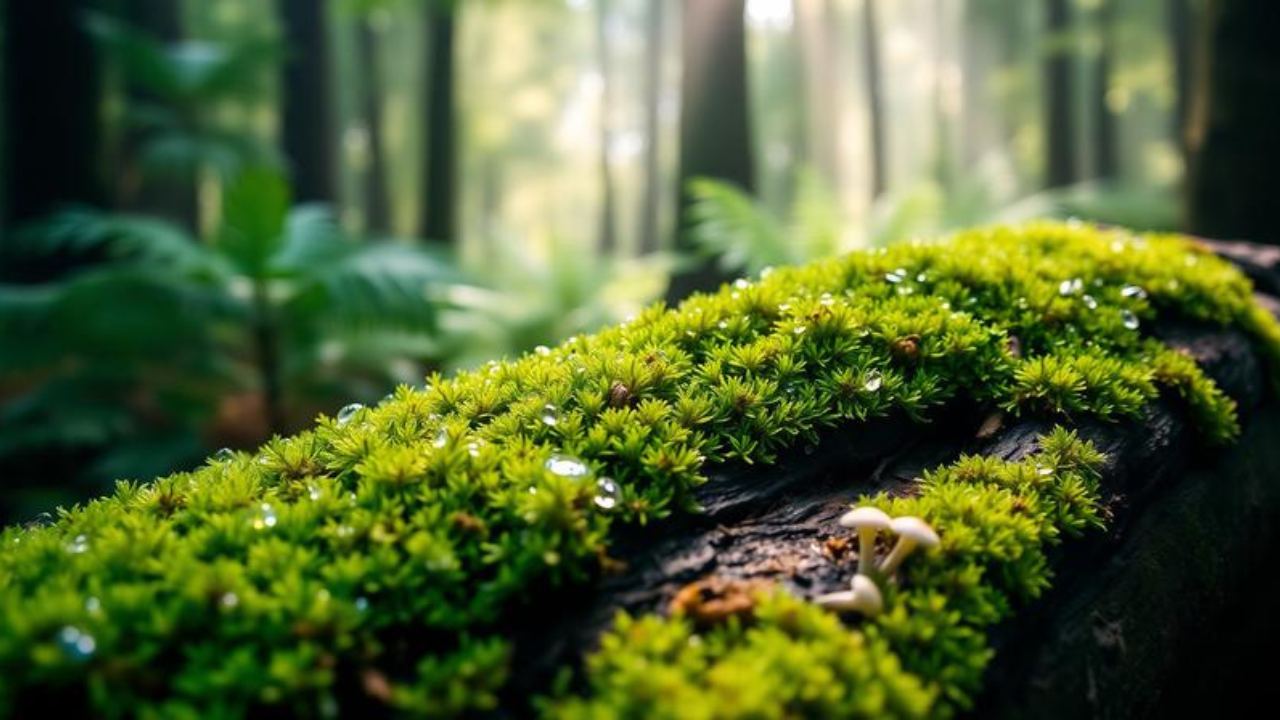
Introduction
Picture a damp forest floor carpeted in velvety green moss, creeping up tree trunks and softening the edges of rotting logs. It looks like nature’s recycling system at work—but is moss actually breaking down that dead wood, or is something else going on? This is a question that trips up students, gardeners, and nature enthusiasts alike.
The confusion is understandable. Moss grows on decaying matter, thrives in moist environments where decomposition happens, and seems to play a role in breaking things down. But here’s the problem: moss is not a decomposer. At least, not in the strict ecological sense of the word.
This article will settle the debate once and for all. You’ll learn exactly what moss is, how it fits into the ecosystem, the critical roles it plays, and why so many people get this wrong. By the end, you’ll understand moss not as a decomposer, but as something far more interesting—a primary producer that indirectly supports the entire decomposition process.
What Is Moss?
Before we can determine whether moss is a decomposer, we need to understand what moss actually is.
The Basics
Mosses are a group of small, non-vascular plants classified as Bryophytes. They typically grow 0.2 to 10 centimeters tall and reproduce via spores rather than seeds. You’ll commonly find them forming dense mats in wet and shady habitats, though some species are remarkably resilient and can tolerate toxins, growing in urban brownfields, cracks in roadways, and on the sides of buildings.
How Moss Differs from Other Plants
Unlike vascular plants (trees, flowers, grasses), mosses lack the specialized plumbing that transports water and nutrients from roots to shoots. Instead of true roots, they have rhizoids—root-like structures that anchor them to their substrate but don’t absorb water and nutrients in the same way. Water moves through moss from cell to cell by diffusion, which is why these plants remain small.
Mosses are autotrophs—they perform photosynthesis to create their own food using sunlight, carbon dioxide, and water. This makes them primary producers, not consumers or decomposers.
The Life Cycle of Moss
Mosses have a two-part life cycle. The gametophyte stage is the familiar green, leafy part we recognize as moss. This is the stage where moss spends most of its life. When haploid spores germinate, they grow into male and female reproductive structures. The male structure (antheridia) produces sperm, while the female structure (archegonia) produces egg cells. The sperm swims through water to fertilize the eggs, beginning the sporophyte stage, which produces spores and starts the cycle anew. Water is essential for moss reproduction, which is why it thrives in moist environments.
Is Moss a Decomposer? The Definitive Answer
The Short Answer
No, moss is not a decomposer. In ecology, decomposers are organisms that break down dead or decaying organic matter, recycling nutrients back into the ecosystem. Common decomposers include fungi and bacteria. Mosses do not actively break down dead organic material.
The Confusion Explained
So why do so many people think moss is a decomposer? There are several reasons:
First, moss often grows on decaying matter like rotting logs. It carpets fallen trees and appears to be consuming them. In reality, the moss is simply using the log as a substrate—a place to anchor itself—while obtaining nutrients from the air and water, not from the wood itself.
Second, moss creates environments where decomposition thrives. By retaining moisture and moderating temperature, moss creates humid microhabitats where decomposers like fungi and bacteria can flourish. This indirect support of decomposition can make it seem like moss is doing the breaking down.
Third, some sources incorrectly label moss as a decomposer. You’ll find answers on forums and Q&A sites claiming moss is a decomposer. But authoritative ecological sources are clear: mosses are primary producers, not decomposers.
What About Peat Moss?
Peat moss (Sphagnum) is a special case worth examining. Sphagnum moss acidifies its environment so effectively that very few of the microbes normally responsible for decomposition can survive. As a result, the lower parts of the moss die off but don’t decompose—they accumulate as peat. This is actually the opposite of decomposition: Sphagnum creates conditions that prevent decay.
Moss Is a Producer, Not a Decomposer
To place moss correctly in the food web:
| Role | Definition | Examples |
|---|---|---|
| Producer | Makes its own food through photosynthesis | Moss, plants, algae, phytoplankton |
| Consumer | Obtains energy by eating other organisms | Animals, herbivores, carnivores |
| Decomposer | Breaks down dead organic matter | Fungi, bacteria |
Moss clearly belongs in the producer category.
Why Moss Matters – The Benefits of This Ancient Plant
Even though moss isn’t a decomposer, its ecological importance cannot be overstated. A massive global study published in Nature Geoscience found that mosses cover approximately 9.4 million square kilometers globally—an area comparable to Canada or China. Here’s why that matters.
1. Moss Supports Decomposition (Indirectly)
While moss doesn’t actively decompose organic matter, it creates the conditions that make decomposition possible. In patches of soil where mosses are present, researchers found more nutrient cycling and decomposition of organic matter. Moss retains moisture, moderates soil temperature, and creates microhabitats where decomposers thrive.
Epiphytic mosses growing on deadwood have been shown to alter the physicochemical properties and microbial community characteristics within the wood, thereby facilitating the decomposition process. So while moss isn’t doing the decomposing itself, it’s creating a welcoming environment for the organisms that do.
2. Moss Is a Carbon Super-Sink
Mosses play a crucial role in combating climate change. The same global study estimated that compared to bare soils, mosses support the storage of 6.43 gigatonnes (6.43 billion tonnes) of carbon from the atmosphere. That’s roughly six times more carbon than all the emissions from agricultural land use change like grazing and clearing vegetation.
3. Moss Prevents Soil Erosion
Mosses play a vital role in stabilizing soil and reducing erosion. Their rhizoids grip the ground, holding onto clay, gravel, and sandy soil substrates. By absorbing excess water, they also reduce the risk of flooding.
4. Moss Filters Pollutants
Mosses can filter pollutants like excess sediment and salt used on roadways. This makes them valuable in urban and suburban environments where runoff carries contaminants into waterways.
5. Moss Creates Habitat
Mosses provide food sources and habitat for macro and micro invertebrates, creating microhabitats essential for some species of soil arthropods. They also create humid environments where other plants can flourish more easily.
6. Moss Lays the Foundation for Other Plants
Mosses are often described as the “lifeblood of plant ecosystems”. By retaining moisture, moderating temperature, and building soil, they create conditions that allow seeds to germinate and other plants to establish themselves.
Common Mistakes to Avoid About Moss and Decomposition
Mistake 1: Thinking Moss Eats Dead Matter
This is the most common error. Because moss grows on rotting logs and appears to be consuming them, people assume moss is a decomposer. In reality, moss is using the log as an anchor—a place to grow. It obtains nutrients from the air and water, not from the wood itself.
What to do instead: Remember that moss is photosynthetic. It makes its own food from sunlight, water, and carbon dioxide. It doesn’t need to “eat” dead matter to survive.
Mistake 2: Confusing “Growing On” with “Breaking Down”
Just because moss grows on decaying material doesn’t mean it’s causing the decay. The decomposition is happening through the action of fungi, bacteria, and invertebrates—not the moss.
What to do instead: Think of moss as a tenant, not a demolition crew. It takes up residence on decaying surfaces but isn’t responsible for the deterioration.
Mistake 3: Assuming All Mosses Behave the Same Way
Different moss species have different ecological roles. Sphagnum (peat moss) actually inhibits decomposition by acidifying its environment. Other mosses may promote decomposition indirectly by creating favorable conditions for decomposers.
What to do instead: Recognize that “moss” is a broad category encompassing many species with different characteristics.
Mistake 4: Overlooking Moss’s Role as a Producer
When people focus on whether moss is a decomposer, they often miss what moss actually is: a primary producer. Moss contributes significantly to net primary productivity in many ecosystems—up to 20% in boreal upland forests.
What to do instead: Place moss correctly in the food web. It’s a producer, making energy available to the entire ecosystem.
Mistake 5: Ignoring the Indirect Effects
Moss’s indirect contributions to decomposition are real and significant, but they’re not the same as being a decomposer. By retaining moisture, moderating temperature, and supporting microbial communities, moss creates conditions where decomposition happens more efficiently.
What to do instead: Appreciate moss’s full ecological role. It’s not a decomposer, but it’s a crucial facilitator of decomposition.
Frequently Asked Questions
Q1: Is moss a producer or a decomposer?
Moss is a producer. It performs photosynthesis to create its own food from sunlight, water, and carbon dioxide. In ecological terms, it is an autotroph, not a decomposer. While moss can indirectly support decomposition by creating favorable conditions for decomposers, it does not actively break down dead organic matter.
Q2: Does moss help with decomposition?
Yes, but indirectly. Mosses contribute to decomposition by:
-
Retaining moisture in the soil
-
Moderating soil temperature
-
Creating humid microhabitats where decomposers thrive
-
Altering the physicochemical properties of deadwood to facilitate decay
Research has shown that in patches of soil where mosses are present, there is more nutrient cycling and decomposition of organic matter. However, the actual decomposition is carried out by fungi, bacteria, and other decomposers.
Q3: Why does moss grow on dead trees?
Moss grows on dead trees because they provide a stable substrate—a place to anchor and grow. Dead trees also tend to be in moist, shady conditions that moss prefers. The moss isn’t feeding on the tree; it’s simply using it as a surface while obtaining nutrients from the air and water.
Q4: What is the difference between moss and a decomposer like fungi?
| Feature | Moss | Fungi (Decomposer) |
|---|---|---|
| Nutrition | Photosynthetic (makes own food) | Absorbs nutrients from dead matter |
| Role | Producer | Decomposer |
| Cell walls | Cellulose | Chitin |
| How it obtains energy | From sunlight | From breaking down organic matter |
Fungi are true decomposers—they secrete enzymes that break down dead organic matter and absorb the nutrients. Moss, by contrast, makes its own food through photosynthesis.
Q5: Is peat moss a decomposer?
No, peat moss (Sphagnum) is not a decomposer. In fact, Sphagnum does the opposite: it creates conditions that prevent decomposition. Sphagnum acidifies its environment so effectively that very few decomposing microbes can survive. As a result, the lower parts of the moss die and accumulate as peat rather than decomposing.
Q6: Can moss be considered both a producer and a decomposer?
No. While some informal sources claim moss is both, this is ecologically inaccurate. An organism’s role is defined by how it obtains energy. Moss obtains energy through photosynthesis (producer). It does not obtain energy by breaking down dead organic matter (decomposer). The confusion arises because moss indirectly supports decomposition, but that doesn’t make it a decomposer.
Conclusion
So, is moss a decomposer? No. Moss is a primary producer—a photosynthetic plant that makes its own food from sunlight, water, and carbon dioxide. It doesn’t actively break down dead organic matter the way fungi and bacteria do.
But here’s the fascinating twist: while moss isn’t a decomposer, it’s one of the most important supporters of decomposition in nature. By retaining moisture, moderating temperatures, and creating welcoming microhabitats, moss creates the conditions that allow decomposers to thrive. It’s the ecosystem’s ultimate facilitator—laying the groundwork for nutrient cycling, carbon storage, soil formation, and the flourishing of countless other species.
Next time you see a cushion of moss on a forest floor or a carpet of green on a rotting log, you’ll know the truth: you’re looking at a tiny power plant, not a recycling center. And that makes it even more remarkable.
Hungry for more nature science? Check out our article “The Hidden World of Soil: How Fungi and Bacteria Keep Our Planet Alive” or subscribe to our newsletter for weekly deep dives into the natural world.