 By DSP Staff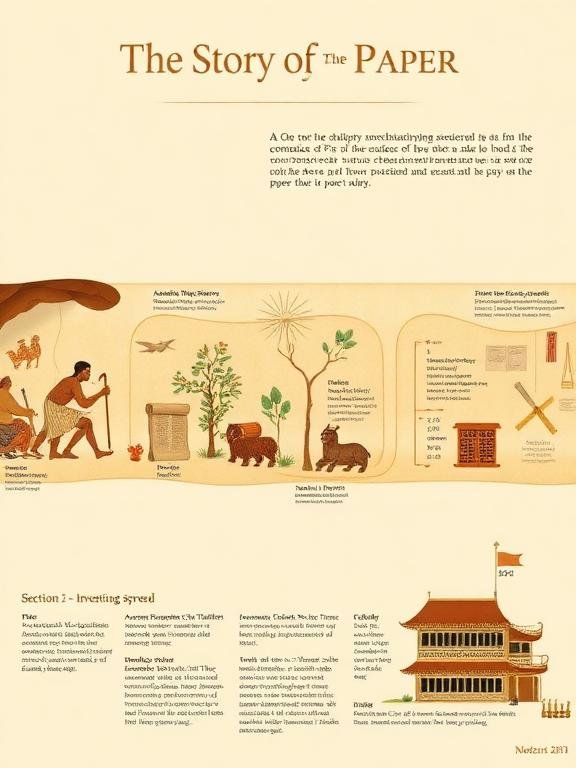
Introduction
You are sitting in the examination hall. The clock is ticking. You turn the page and see a passage you have never read before—an unseen passage. Your heart races. Where do you even begin?
This is a problem every student faces. Unseen passages are designed to test your reading comprehension and analytical skills in real-time. They are unpredictable, often dense, and can feel overwhelming. Unlike the literature you have studied in class, there is no prior preparation, no familiar context, no memorised notes to fall back on. You are completely on your own with a blank page and a ticking clock.
But here is the good news: unseen passages are not as daunting as they seem. They follow predictable patterns, and with the right approach, you can master them. This article delivers a complete, step-by-step solution for tackling unseen passages—using the classic topic “From Papyrus to Paper” as our working example. You will learn exactly how to read, analyse, and answer questions with confidence and precision. By the end, you will have a proven system that works for any unseen passage, in any exam.
What Is an Unseen Passage?
An unseen passage is a piece of text—prose, poetry, or even a factual article—that you have never encountered before. It appears in examinations to assess your ability to:
-
Read and understand new material quickly
-
Extract key information and identify main ideas
-
Interpret meaning, tone, and authorial intent
-
Answer questions accurately based on the text
Unlike the texts you study in class, unseen passages come with no background knowledge or prior preparation. The examination board selects a passage specifically because it is new to you. This levels the playing field: every student starts from the same point.
The “From Papyrus to Paper” Passage
To illustrate our strategies, let us work with a typical unseen passage on the history of writing materials. Here is a sample passage you might encounter:
PAPER
Paper is everywhere. We use it for homework, money, checks, books, letters, wallpaper, and greeting cards. We have paper towels, napkins, plates, cups, and tissues. We print the news every day on newspaper. Our history and knowledge is written on paper. Without paper, our lives would be completely different.
From the very beginning of time, people have tried to record their thoughts and lives. The earliest humans drew pictures on cave walls. Later, people used large pieces of clay to write on. Almost 5,000 years ago, the Egyptians wrote on pieces of plants called papyrus. Papyrus was used throughout the ancient world of the Mediterranean for thousands of years. Eventually it was replaced by parchment. Parchment was made from animal skins. It was stronger and lasted longer than any other material.
The Chinese made the first real paper in the year A.D. 105. They mixed tree bark and small pieces of old cloth with water. They used a screen to remove the thin, wet piece of paper. Then they let the paper dry in the sun. The Chinese kept papermaking a secret until after 751. In that year, there was a war between the Chinese and the Muslims. Many Chinese papermakers were taken away from China to live in Muslim countries. The art of papermaking soon spread throughout the Muslim world. Finally, by the end of the twelfth century, papermaking reached Europe. The first paper made in Europe was in Spain in 1151.
The first important improvement on the Chinese method of papermaking was in France in 1798. A man named Nicholas Louis Robert invented a machine for making paper. His machine could make paper much faster than one person could by hand. However, his machine was not very successful. About ten years later, an Englishman improved on Robert’s machine and began producing paper.
The most important improvement in papermaking also happened in France. A scientist observed a wasp making its nest. The wasp chewed up pieces of wood, mixed it with the chemicals in its mouth, and made a paper nest. The scientist realised that people could make paper from wood, too. Finally, a machine was invented for grinding wood into pulp to use for making paper.
Today, the principal ingredient in paper is wood pulp. It is made by machine. There are also other kinds of paper made from rice, wheat, cotton, corn, and other plants. Paper from wood pulp is the most common. Canada and the United States are the world leaders in paper production, due in part to the quantity of wood that is available in the forests of these two countries.
Because paper is made of wood, many people are becoming concerned that too many trees are being chopped down every year in order to produce paper. Trees are an important part of the environment. As a result, many companies that produce paper are using old paper instead of new wood pulp to make paper. This method of using old products again instead of simply throwing them away is called recycling. Recycling paper helps reduce the number of trees that are used every year.
Many people also try to use less paper in their daily lives. They use both sides of a sheet of paper instead of just one. They use cloth handkerchiefs instead of paper tissues. There are also special containers in many schools and public places where people can put used paper instead of throwing it into the garbage can. Then this paper is collected to be recycled.
Whether we use a little or a lot, paper has an important place in our lives. The books we read and write are made of paper. Our history and scientific knowledge is written on paper.
Now that we have our passage, let us explore why mastering unseen passages matters and how to solve them effectively.
Why It Matters / Benefits
1. High Marks in Examinations
Unseen passages often carry significant weight in English and language exams. For example, in the CBSE Class 10 English exam, this section can substantially boost your overall marks if done correctly. Mastering this skill is not optional—it is essential for scoring well.
2. Develops Critical Thinking
Unseen passages test more than just reading. They assess your ability to analyse, interpret, and draw conclusions from new information—skills that are valuable in every subject and in life beyond school.
3. Builds Reading Speed and Comprehension
Regular practice with unseen passages improves your reading speed and ability to grasp key ideas quickly. This is a skill that serves you well in university, professional exams, and everyday life.
4. Levels the Playing Field
Because the passage is unseen, no student has an unfair advantage from prior knowledge or memorisation. Your performance reflects your genuine ability to understand and analyse text.
5. Transfers to Other Subjects
The skills you develop—skimming, scanning, identifying main ideas, and answering precisely—are applicable to science, history, geography, and virtually every other subject that involves reading comprehension.
Step-by-Step: How to Solve an Unseen Passage (7 Proven Strategies)
Here is a systematic approach that works for any unseen passage. We will apply each step to our “From Papyrus to Paper” passage.
Strategy 1: First Glance at the Questions
Before you read the passage, take 30 seconds to glance at the questions. This is a game-changer. Why? Because it tells you exactly what to look for as you read.
-
If a question asks for a specific date, you know to watch for numbers.
-
If a question asks about the author’s tone, you know to pay attention to descriptive language.
-
If a question asks for the main idea, you know to identify the central theme.
Applying this to our passage: Before reading, glance at typical questions like:
-
What material did the Egyptians use for writing?
-
Who made the first real paper?
-
What is recycling?
-
Why are people concerned about paper production?
Now you know what information matters as you read.
Strategy 2: Skim the Passage for the Main Idea
First read: Read the passage quickly—do not stop at every word. Your goal is to get a general sense of what the passage is about.
Ask yourself:
-
What is the topic?
-
What is the main argument or purpose?
-
What is the overall structure?
Applying to our passage: A quick skim tells us this passage is about the history of paper—from ancient cave drawings and clay tablets, to Egyptian papyrus, to Chinese papermaking, to modern recycling. The structure is chronological: it moves from the earliest writing materials to the present day.
Strategy 3: Scan for Specific Details
Second read: Now that you know the big picture, go back and scan for specific details. This is where you find the answers to the questions you glanced at earlier.
Look for:
-
Names (people, places)
-
Dates and numbers
-
Key events and inventions
-
Definitions and explanations
Applying to our passage:
-
Egyptians wrote on papyrus almost 5,000 years ago
-
The Chinese made the first real paper in A.D. 105
-
The first paper in Europe was made in Spain in 1151
-
Nicholas Louis Robert invented a papermaking machine in France in 1798
-
Recycling is using old products again instead of throwing them away
Strategy 4: Understand the Context and Tone
To answer higher-order questions (like those about the author’s purpose or tone), you need to understand the context.
Ask yourself:
-
Is this passage narrative, descriptive, or argumentative?
-
What is the author’s attitude toward the subject?
-
Who is the intended audience?
Applying to our passage: This is a descriptive/expository passage. The author is presenting factual information about the history of paper in a neutral, informative tone. The intended audience is likely students or general readers.
Strategy 5: Answer in Your Own Words
When you write your answers, do not copy entire sentences from the passage. Instead, use your own words to demonstrate understanding.
Why this matters:
-
It shows the examiner you actually understand the material
-
It avoids the trap of including irrelevant information
-
It makes your answers clearer and more concise
Applying to our passage:
| Question | Poor Answer (Copying) | Good Answer (Own Words) |
|---|---|---|
| What did the Egyptians use for writing? | “Almost 5,000 years ago, the Egyptians wrote on pieces of plants called papyrus.” | “The Egyptians used papyrus, a plant-based material, for writing nearly 5,000 years ago.” |
| What is recycling? | “This method of using old products again instead of simply throwing them away is called recycling.” | “Recycling is the process of reusing old materials instead of discarding them.” |
Strategy 6: Link Your Answer to the Question
Every answer must directly address what is being asked. Use linking phrases that echo the question’s wording.
Example:
-
Question: “Why are people concerned about paper production?”
-
Weak answer: “Trees are cut down.”
-
Strong answer: “People are concerned about paper production because it involves cutting down too many trees, which harms the environment.”
Notice how the strong answer repeats the question’s phrasing (“people are concerned”) and directly answers the “why.”
Strategy 7: Manage Your Time Wisely
Time management is critical. Allocate a specific amount of time to the unseen passage section and stick to it.
Suggested time allocation (for a 40-mark section):
-
5 minutes: Glance at questions + skim the passage
-
10 minutes: Scan for details + answer questions
-
5 minutes: Review and check answers
Do not spend too long on any single question. If you are stuck, move on and come back later.
Common Mistakes to Avoid
Even strong students lose marks on unseen passages. Here are the most common mistakes and how to avoid them.
Mistake 1: Paraphrasing Instead of Analysing
The problem: Many students simply retell what the passage says instead of analysing it. Teachers do not want summaries—they want insight.
How to avoid: Do not just describe what you see. Explain why it matters and what it means.
| Mistake | Fix |
|---|---|
| “The passage says paper is used for many things.” | “The passage emphasises the ubiquity of paper in modern life to highlight its importance and the potential consequences of its overuse.” |
Mistake 2: Listing Techniques Without Explaining Their Effect
The problem: Spotting a technique (like a metaphor or a statistic) is not enough. You must explain what it does.
How to avoid: Always state the effect of the technique and how it supports the text’s meaning.
Mistake 3: Using Weak or Obvious Quotes
The problem: Students often choose quotes that are too literal, leaving little to analyse.
How to avoid: Choose quotes that are layered with meaning, symbolic, or emotionally charged.
Mistake 4: Not Linking Back to the Question
The problem: You may write a great analysis, but if it does not answer the question, it is useless.
How to avoid: Use linking phrases that echo the question’s wording.
Mistake 5: Not Using Reading Time Properly
The problem: Many students jump straight into writing without using the reading time wisely. This leads to poor comprehension and incorrect answers.
How to avoid: Use the reading time to skim the passage and glance at the questions. Do not start writing until you understand what you are being asked.
Mistake 6: Writing Too Much
The problem: Students write long, rambling answers that waste time and often miss the point.
How to avoid: Be precise and concise. Quality over quantity.
Mistake 7: Adding Outside Knowledge
The problem: Students sometimes add their own opinions or outside knowledge that is not in the passage.
How to avoid: Base your answers solely on the information provided in the passage. If it is not in the text, do not include it.
Frequently Asked Questions
Q1: What does “unseen passage” mean?
An unseen passage is a piece of text that you have never read before, which appears in an exam to test your reading comprehension and analytical skills. You cannot prepare for it in advance—you must rely on your ability to read, understand, and interpret the text on the spot.
Q2: Should I read the passage or the questions first?
The best strategy is to glance at the questions first, then read the passage. This tells you what to look for as you read, saving time and helping you focus on relevant information.
Q3: How can I improve my speed in solving unseen passages?
Practice is key. Regularly attempt unseen passages under timed conditions. Use mock tests to build your reading speed and accuracy. Over time, you will become faster and more confident.
Q4: What if I don’t understand some words in the passage?
Do not panic. Try to guess the meaning from the context—the words and sentences around it. Often, you do not need to understand every single word to answer the questions correctly.
Q5: How do I answer “inference” questions?
Inference questions ask you to read between the lines. The answer is not directly stated in the passage but is implied. Look for clues in the author’s language, tone, and choice of details. Then, explain what these clues suggest.
Q6: Can I copy sentences directly from the passage?
It is better to paraphrase in your own words. Copying entire sentences shows a lack of understanding and can waste valuable time. Use your own words to demonstrate that you truly comprehend the material.
Conclusion
The “From Papyrus to Paper” unseen passage is a classic example of the kind of reading comprehension you will encounter in exams. But the strategies we have covered here apply to any unseen passage, on any topic.
Remember the seven strategies: glance at the questions, skim for the main idea, scan for details, understand the context, answer in your own words, link to the question, and manage your time. Avoid the common mistakes—paraphrasing instead of analysing, listing without explaining, using weak quotes, and failing to link back to the question.
With consistent practice, these strategies will become second nature. You will walk into the examination hall confident, knowing that no passage—seen or unseen—can catch you off guard.
Ready to put these strategies into practice? Explore our other articles on exam preparation, reading comprehension techniques, and study skills. Subscribe to our newsletter for weekly tips and practice passages delivered straight to your inbox.