 By DSP Staff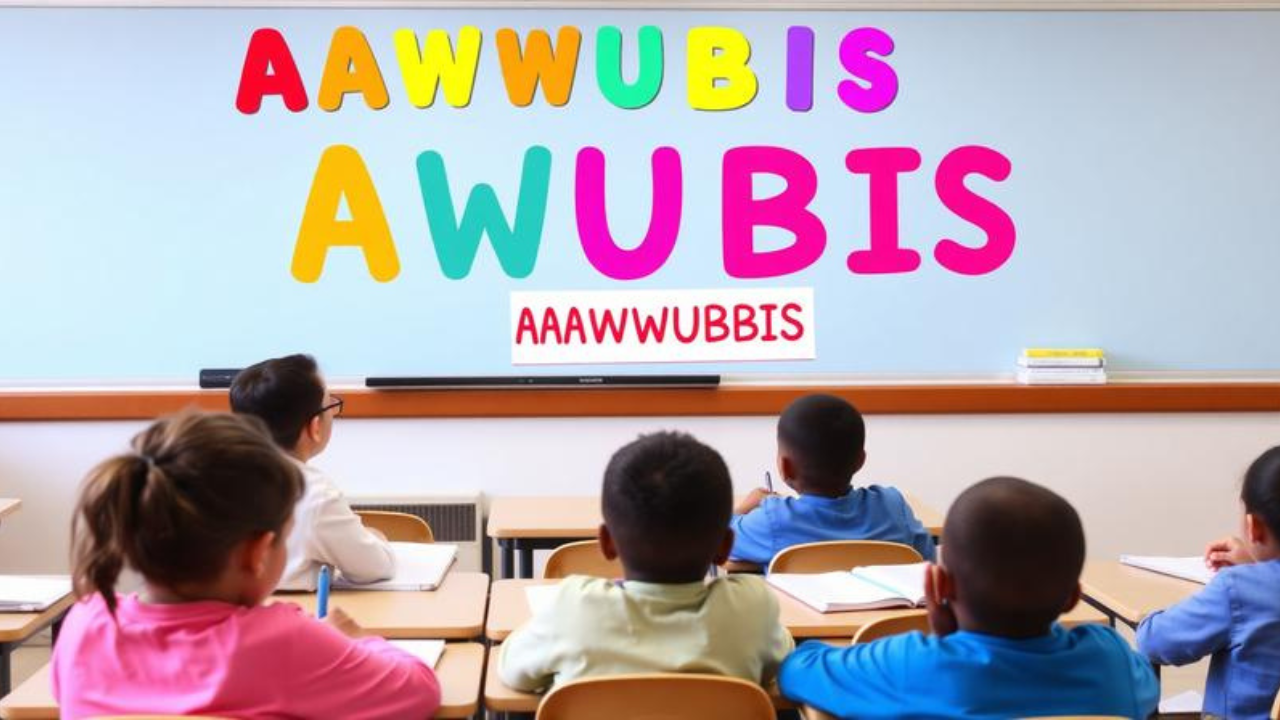
Do you ever write sentences that feel incomplete, as if they hang in the air waiting for something more? You’re not alone. A 2024 report by the National Writing Project discovered that sentence fragments rank as the number one mechanical error in student essays, with over 65% of fragments caused by mishandled subordinating conjunctions. The acronym AWUBIS — or its extended form, AAAWWUBBIS — holds the key to solving this problem permanently. In this guide, you’ll discover exactly what awubis stands for, the complete awubis words list, how awubis shapes complex sentences, and how it differs from FANBOYS. You’ll also get step-by-step instructions, expert tips, myth-busting, and targeted exercises that will transform your grammar from hesitant to confident. By the time you finish reading, you’ll never again mistake a dependent clause for a complete thought.
Table of Contents
-
What Is AWUBIS?
-
The History and Origin of the AWUBIS Acronym
-
Key Features: Understanding AWUBIS Words and Sentence Structures
-
Why AWUBIS Matters: Benefits for Student Writing
-
How to Use AWUBIS Words Correctly — Step by Step
-
Common Myths and Misconceptions About AWUBIS
-
Expert Tips and Best Practices for Mastering AWUBIS
-
Frequently Asked Questions About AWUBIS
-
Final Verdict: Why AWUBIS Is a Game-Changer for Student Writers
What Is AWUBIS?
AWUBIS is a memorable acronym that stands for ten of the most common subordinating conjunctions in English. The full mnemonic, AAAWWUBBIS, breaks down as: After, Although, As, When, While, Until, Because, Before, If, Since. These words all perform the same grammatical function—they begin a dependent clause (a group of words with a subject and a verb that cannot stand alone as a complete sentence). When you attach that dependent clause to an independent clause (a complete thought), you create a complex sentence.
Think of awubis as a yellow traffic light. You can’t stop at yellow; you must continue to the green light for the signal to make sense. Similarly, an awubis clause like Because the library closed early leaves your reader waiting. Add the independent clause we studied at the coffee shop instead, and the full sentence becomes clear: Because the library closed early, we studied at the coffee shop instead. The awubis word because signals a cause, and the independent clause delivers the result.
The awubis meaning extends beyond a simple word list. It represents a category of connectors that inject logic, time, contrast, and condition directly into your sentences. Without awubis, you would need multiple simple sentences to express the same relationships. For instance, “The rain started. We packed up the picnic.” becomes “When the rain started, we packed up the picnic.” The awubis word when establishes a time connection that makes the narrative fluid and efficient.
Students often confuse awubis with FANBOYS (coordinating conjunctions: for, and, nor, but, or, yet, so). The critical difference lies in the type of clause each introduces. AWUBIS words launch dependent clauses, which are incomplete by themselves. FANBOYS words join independent clauses, which are already complete. This single distinction drives all the punctuation rules you’ll learn in this guide.
Understanding awubis unlocks the ability to write with sophistication and nuance. You’ll eliminate fragments, add rhythm, and clearly signal how your ideas connect. Whether you’re drafting an essay, a short story, or a research paper, awubis gives you the tool to move beyond choppy, simple sentences.
The History and Origin of the AWUBIS Acronym
The term awubis didn’t emerge from dusty grammar tomes. It was born in the classroom, crafted by innovative English teachers who needed a sticky, memorable way to help students internalize subordinating conjunctions. The early 2000s saw the rise of acronyms as powerful teaching tools. FANBOYS had already proven that a playful word could anchor an entire grammar concept. Educators sought an equivalent for the next step in sentence complexity.
The earliest documented use of AAAWWUBBIS appears in teacher forums and lesson plan archives around 2005. Teachers wanted a counterpart to FANBOYS that covered the words students most frequently encountered yet most often mishandled. The acronym needed to be pronounceable and visual. AAAWWUBBIS sounded like a chant, and when shortened to awubis, it became even easier to recall. The extended “AAA” captured three high-frequency A-starting conjunctions: after, although, and as. The “WW” covered when and while. “U” for until. “B” for because and before. “I” for if. “S” for since. Together, they formed a complete starter kit.
By 2010, awubis had spread widely through middle and high school ELA curricula. Anchor charts featuring the AAAWWUBBIS list decorated thousands of classroom walls. Teachers created songs, hand motions, and call-and-response drills. A 2015 survey by the National Council of Teachers of English found that nearly 75% of responding educators used a mnemonic for subordinating conjunctions, with awubis being the most popular.
The genius of the acronym lies in its phonetic friendliness. “Uh-WOO-bis” rolls off the tongue and sticks in memory. Students who learn early often report that they can still recite the list years later. The word itself carries no prior meaning, so it becomes a dedicated container for grammar knowledge—no confusion with other vocabulary.
In recent years, the meaning has expanded beyond a simple mnemonic. It now represents an entire approach to teaching complex sentences. Worksheets, online quizzes, and interactive games all center on awubis. The acronym has also influenced how standardized tests are taught. SAT and ACT prep materials frequently reference awubis when explaining clause structure and punctuation rules.
The evolution of mirrors a larger trend in grammar instruction: moving from dry rule memorization to concept-driven, mnemonic-based learning. By giving students a single, pronounceable word for a scattered set of conjunctions, teachers made subordination accessible and even fun. Today, awubis remains a staple resource for any student serious about mastering English sentence structure.
Key Features: Understanding AWUBIS Words and Sentence Structures
Grasping awubis means understanding its components: the word list, the clauses they create, the punctuation rule that governs them, and how they compare to FANBOYS.
The AAAWWUBBIS Words List
The complete awubis words list includes ten subordinating conjunctions:
-
After
-
Although
-
As
-
When
-
While
-
Until
-
Because
-
Before
-
If
-
Since
These ten words are not the only subordinating conjunctions in English. Others—such as unless, though, whereas, wherever, so that—perform the same function. However, AAAWWUBBIS covers the most frequently used and tested subordinators. Master these ten, and you’ll handle the vast majority of complex sentences you’ll write as a student.
Dependent Clauses and Independent Clauses
Every awubis word begins a dependent clause. A dependent clause has a subject and a verb but does not express a complete thought. It depends on an independent clause to finish the idea. For example, Although the sun was shining has a subject (sun) and a verb (was shining), but you’re left asking, “What happened although the sun was shining?”
An independent clause is a complete sentence on its own. The air stayed cold stands alone perfectly. When you combine the two, you create a complex sentence: Although the sun was shining, the air stayed cold. The awubis word although signals an unexpected contrast.
The AWUBIS Comma Rule
The punctuation of awubis sentences follows one simple, unbreakable rule. When the clause comes first, you must place a comma after it. When the independent clause comes first, you do not use a comma. This rule works for every awubis word.
-
AWUBIS clause first: Because I woke up late, I missed the bus. (comma after late)
-
Independent clause first: I missed the bus because I woke up late. (no comma)
This single rule eliminates guesswork. Your ear can confirm it: you naturally pause after an introductory dependent clause. That pause corresponds to the comma.
AWUBIS vs FANBOYS
Confusing awubis with FANBOYS leads to the most persistent punctuation errors in student writing. The table below makes the distinction crystal clear.
| Feature | AWUBIS (Subordinating) | FANBOYS (Coordinating) |
|---|---|---|
| Stands for | AAAWWUBBIS: After, Although, As, When, While, Until, Because, Before, If, Since | For, And, Nor, But, Or, Yet, So |
| Clause type introduced | Dependent clause (incomplete) | Independent clause (complete) |
| Can the clause stand alone? | No | Yes |
| Punctuation when joining | Comma after the dependent clause if it comes first; no comma if it follows | Comma before the FANBOYS when joining two independent clauses |
| Sentence type created | Complex sentence | Compound sentence |
| Example | After the game ended, we celebrated. | The game ended, so we celebrated. |
This table clarifies the distinct roles. AWUBIS creates hierarchy; FANBOYS creates equality. Both are essential, but they operate under different rules.
Types of Relationships AWUBIS Words Signal
Each awubis word conveys a specific logical relationship. Grouping them by function helps you choose the right word quickly.
-
Time: after, as, before, since, until, when, while
-
Cause/Reason: because, since
-
Condition: if
-
Contrast/Concession: although, while (when used to contrast)
Knowing these categories lets you select the precise conjunction for your intended meaning. If you want to show that two events happened simultaneously, use while or as. To set a deadline, use until or before.
Why AWUBIS Matters: Benefits for Student Writing
Internalizing the system delivers measurable improvements across every dimension of your writing.
-
Eliminate sentence fragments permanently. Once you recognize that an awubis clause cannot stand alone, you’ll never again submit a fragment like Since you asked. as a finished sentence. You’ll instinctively attach an independent clause every time.
-
Add rhythm and sentence variety. A paragraph composed entirely of simple sentences sounds robotic. Mixing awubis sentences with simple and compound structures creates a natural cadence. A 2025 Grammarly analysis of 100,000 student essays found that papers with varied sentence patterns scored 22% higher on clarity rubrics than those relying solely on simple sentences.
-
Show precise logical relationships. The word because explicitly signals causation. Although announces contrast. Your readers don’t guess how your ideas connect; you spell it out. This precision strengthens arguments in persuasive and analytical writing.
-
Improve standardized test scores. The SAT, ACT, and state writing assessments reward correct complex sentence construction and penalize fragments. Mastering translates directly to higher marks in the grammar and writing sections.
-
Prepare for college-level writing. University essays expect a command of subordinate clauses for nuanced thesis statements and smooth transitions. AWUBIS provides the foundation for that advanced work.
-
Boost editing efficiency. When you understand the comma rule, you can scan your drafts quickly and fix fragments and punctuation errors without second-guessing. Editing becomes a fast, confident process rather than a confusing chore.
The Purdue Online Writing Lab highlights that the ability to subordinate ideas is a hallmark of mature prose, separating advanced writers from novices. You gain that hallmark by mastering awubis.
How to Use AWUBIS Words Correctly — Step by Step
Follow these seven steps to build flawless awubis sentences every time. Each step is actionable and designed to turn knowledge into automatic skill.
Step 1: Identify the two ideas you want to connect.
Start with two simple thoughts. For example: The alarm didn’t ring. I woke up late. Both are independent clauses, but they feel disconnected. You want to show that one caused the other.
Step 2: Choose the right AWUBIS word for the relationship.
Ask yourself: What logical connection exists here? Cause and effect calls for because or since. Time sequence calls for after, before, when, while, as, until. Contrast calls for although or while. A condition needs if. For our example, because perfectly shows causation: the alarm not ringing caused waking up late.
Step 3: Write the AWUBIS clause with a subject and verb.
Turn one independent clause into a dependent clause by placing the chosen word in front. Because the alarm didn’t ring is now a dependent clause. It has a subject (alarm) and a verb (didn’t ring) but cannot stand alone. Ensure you didn’t accidentally drop the subject or verb.
Step 4: Attach the remaining independent clause.
Combine the dependent awubis clause with the other independent clause. Because the alarm didn’t ring, I woke up late. The sentence is now complete.
Step 5: Apply the comma rule based on clause order.
Check which clause comes first. Here, the awubis clause leads, so you need a comma after it. If you reversed the order—I woke up late because the alarm didn’t ring—the independent clause leads, and no comma is needed. The rule is absolute: introductory clause → comma; clause following → no comma.
Step 6: Read the sentence aloud and listen for the pause.
Your ear confirms correct punctuation. Say “Because the alarm didn’t ring I woke up late” without a pause. It sounds rushed and confusing. The natural pause after ring tells you a comma belongs there. Train yourself to trust this auditory check.
Step 7: Practice with targeted AWUBIS exercises.
Knowledge without practice fades. Use awubis exercises that ask you to combine simple sentence pairs into complex ones, identify fragments, and correct comma placement. Repetition builds the neural pathways that make awubis usage automatic. You can find free awubis worksheets designed for this exact purpose. [ awubis worksheets]
Consistency across these seven steps will engrave the awubis framework into your writing instincts.
Common Myths and Misconceptions About AWUBIS
Misinformation about awubis abounds, and believing these myths will sabotage your writing. Let’s set the record straight.
Myth: An AWUBIS clause is a complete sentence if it has a subject and a verb.
The truth: A subject and a verb are necessary but not sufficient for a complete sentence. An awubis clause has both, yet the subordinating conjunction at its front makes it dependent. Although she tried feels unfinished because it is. You must attach an independent clause.
Myth: You always need a comma before “because.”
The truth: This myth likely stems from confusion with FANBOYS. FANBOYS require a comma before them when joining two independent clauses.words like because do not. I stayed up late, because I had to study is incorrectly punctuated. The correct version: I stayed up late because I had to study. Only when the because clause comes first do you add a comma: Because I had to study, I stayed up late.
Myth: You should never start a sentence with an AWUBIS word.
The truth: You absolutely can and should start sentences with words. Doing so creates sentence variety and emphasizes the condition or reason before the main point. If you prepare well, you will succeed is a strong opening. The key is to ensure the sentence doesn’t end with only the dependent clause.
Myth: AWUBIS and FANBOYS are interchangeable.
The truth: They serve different grammatical functions. FANBOYS connect equals; creates dependency. You cannot substitute but for although without adjusting punctuation and clause structure. Understanding this difference protects you from comma splices and fragments.
Myth: The AWUBIS list includes all subordinating conjunctions.
The truth: AAAWWUBBIS covers the ten most common, but English has many more. Unless, though, whereas, wherever, so that, even though are also subordinating conjunctions. AWUBIS gives you a powerful starter set, not an exhaustive catalog.
Expert Tips and Best Practices for Mastering AWUBIS
Take your awubis skills from competent to exceptional with these proven strategies.
-
Create a personalized AAAWWUBBIS chant or jingle. Rhythm embeds information deeper than reading. Invent a short tune or rap that lists the ten words in order. Recite it in the shower, on the bus, before tests. Your brain will retrieve the list effortlessly when you need it.
-
Keep a running “AWUBIS journal” for one month. Each day, write one complex sentence using a different word. Label the dependent and independent clauses. At the end of the month, you’ll have 30 original examples and the patterns will feel natural.
-
Color-code your drafts during revision. Highlight every word in yellow and every independent clause in green. Check that each yellow-highlighted clause attaches to green. Scan for missing commas after introductory yellow clauses. This visual audit catches errors instantly.
-
Flip your sentences to test comma usage. When you’re unsure whether a comma belongs, reverse the clause order. If the comma disappears when the dependent clause moves to the end, you’ve confirmed the original needed it. When the rain stopped, we left → We left when the rain stopped. Comma vanished. Original correct.
-
Use “while” for both time and contrast—but be clear. While can mean “during the time that” or “although.” Ensure your reader can distinguish. While I studied, my roommate napped (time). While I studied hard, the test was still difficult (contrast). Context makes the meaning clear.
-
Limit introductory AWUBIS clauses to no more than two consecutive sentences. Overloading the front of paragraphs with dependent clauses can make your writing feel top-heavy and delay the main point. Vary your sentence openings.
-
Download structured worksheets and complete them weekly. Awubis worksheets that progress from identification to creation to error correction build skill systematically. Consistent, spaced practice outperforms cramming.
-
Teach the concept to a friend. Explaining to someone else forces you to articulate the rules clearly and reveals any gaps in your own understanding. Grab a classmate and walk them through the AAAWWUBBIS list and the comma rule.
-
Collect real-world examples from your reading. When you encounter a complex sentence in a novel, news article, or textbook, pause and identify the word and clause structure. Seeing the rule in action across genres reinforces its universality.
-
Reward progress with a milestone tracker. Set a goal: write a one-page story using at least ten sentences. When you achieve it, celebrate with something you enjoy. Gamifying the learning process keeps motivation high and makes grammar mastery feel like an accomplishment.
Frequently Asked Questions About AWUBIS
What are the AAAWWUBBIS words?
The AAAWWUBBIS words are ten subordinating conjunctions used to begin dependent clauses: After, Although, As, When, While, Until, Because, Before, If, Since. This extended acronym expands on the shorter awubis. Each word signals a specific relationship—time, cause, condition, or contrast. Teachers use this mnemonic because it sounds playful and sticks in memory. Students who memorize the AAAWWUBBIS list can quickly spot dependent clauses in their writing and avoid fragment errors. The list doesn’t include every subordinating conjunction in English, but it covers the most commonly used and tested ones in academic writing.
What does AWUBIS mean in grammar?
AWUBIS is a mnemonic acronym for subordinating conjunctions. The awubis meaning derives from the AAAWWUBBIS list: After, Although, As, When, While, Until, Because, Before, If, Since. These words introduce dependent clauses—groups of words with a subject and verb that cannot stand alone as complete thoughts. When an awubis clause attaches to an independent clause, it forms a complex sentence. The acronym helps students remember that these conjunctions create subordination, not coordination. Understanding awubis directly prevents sentence fragments and teaches the correct comma usage for introductory dependent clauses.
How do you use AWUBIS in a sentence?
You use an awubis word at the beginning of a dependent clause, then attach that clause to an independent clause. The order determines punctuation. If the awubis clause comes first, place a comma after it: After the storm passed, the birds sang again. If the independent clause comes first, no comma is needed: The birds sang again after the storm passed. Ensure the dependent clause has a subject and verb. AWUBIS words clarify relationships—because for cause, if for condition, although for contrast—making your writing more precise.
What is the difference between AWUBIS and FANBOYS?
AWUBIS represents subordinating conjunctions (AAAWWUBBIS) that start dependent clauses. FANBOYS represents coordinating conjunctions (for, and, nor, but, or, yet, so) that join independent clauses. The key difference: an awubis clause cannot stand alone as a sentence; a FANBOYS clause can. Punctuation rules differ—awubis requires a comma only when the dependent clause comes first; FANBOYS requires a comma before the conjunction when joining two independent clauses. AWUBIS creates complex sentences; FANBOYS creates compound sentences. Both are essential for sentence variety.
Can you start a sentence with an AWUBIS word?
Yes, you can and should start sentences with awubis words. Introductory awubis clauses add variety and establish context before the main point. Example: If you finish early, you may leave. The dependent clause If you finish early sets a condition. Just remember to place a comma after the introductory clause and ensure the sentence finishes with an independent clause. Starting with awubis is grammatically correct and stylistically effective, provided you avoid leaving the dependent clause as a fragment.
What are some AWUBIS exercises for practice?
Effective awubis exercises include: (1) combining simple sentence pairs into complex sentences using given awubis words; (2) identifying fragments in a paragraph and correcting them by adding independent clauses; (3) sentence-sorting activities where you categorize clauses as dependent or independent; (4) comma-placement drills focusing on introductory versus final dependent clauses. You can find ready-made worksheets and interactive quizzes online. Regular practice with awubis exercises transforms the rules from conscious effort to automatic habit, dramatically reducing fragment errors in your drafts.
Final Verdict: Why AWUBIS Is a Game-Changer for Student Writers
The acronym awubis packages a complex grammar concept into a single, unforgettable word. Once you internalize the AAAWWUBBIS list and the one golden comma rule, you equip yourself with the ability to write complex sentences that are grammatically sound and stylistically engaging. This skill does more than eliminate red ink on your essays—it changes how you think about connecting ideas. You move from stringing together simple statements to crafting layered, logical relationships that guide your reader smoothly from one thought to the next.
The evidence is clear: students who master write with greater variety, score higher on assessments, and edit their own work more efficiently. The benefits extend beyond the classroom into college admissions essays, scholarship applications, and any future career that values clear communication. AWUBIS is not just a test-prep trick; it’s a foundational tool for lifelong writing competence.
Start today. Take a paragraph you’ve recently written and revise three sentences using words. Notice how the rhythm shifts and the clarity sharpens. Then, challenge yourself to incorporate at least two sentences in every writing assignment this week. Bookmark this guide, download a set of awubis exercises, and commit to ten minutes of daily practice. The fragments that once frustrated you will become relics of the past.
Call to Action: Which awubis word do you find most challenging to use correctly, and what’s your favorite trick for remembering the list? Share your thoughts in the comments below—I’d love to hear your strategies and struggles. If you found this guide helpful, share it with a classmate who could use a grammar boost. And don’t forget to explore our other deep-dive articles on FANBOYS and sentence structure for a complete writing toolkit.