 By DSP Staff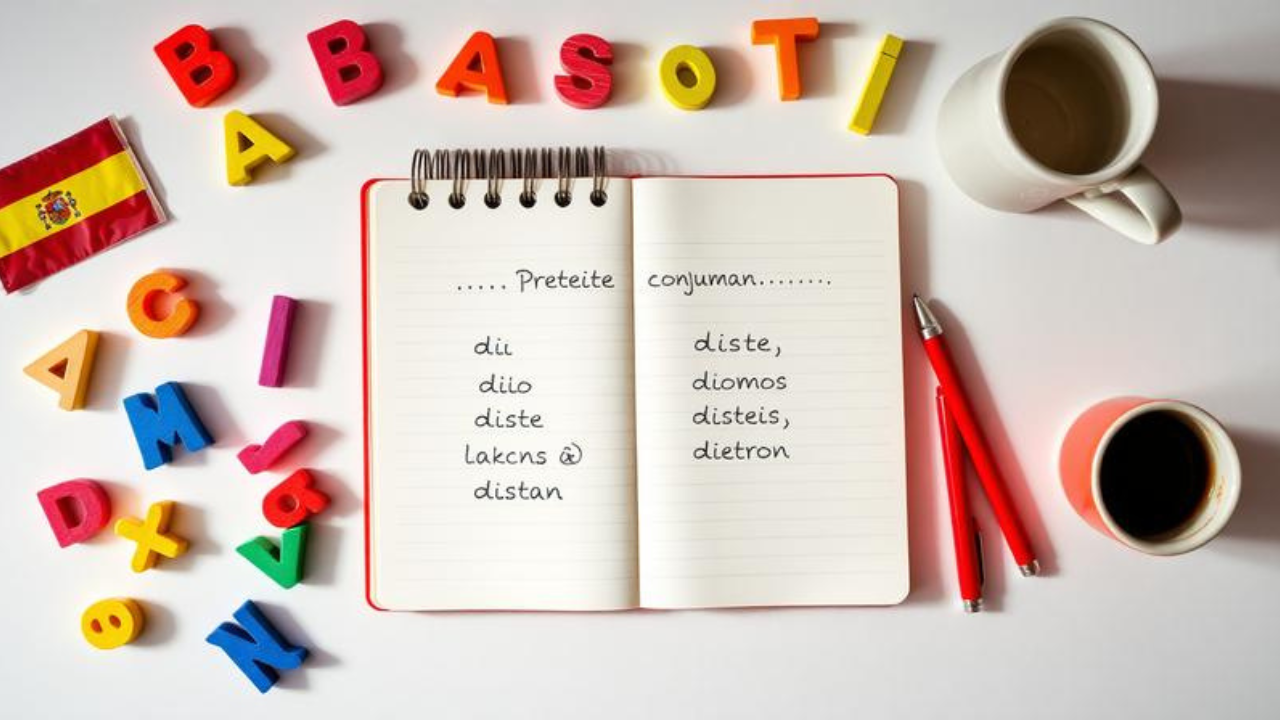
Introduction
You’re in the middle of a Spanish conversation, you want to say “I gave” something, and suddenly your brain freezes. Is it di? dé? doy? You know the verb dar means “to give,” but when it comes to the past tense, nothing seems to follow the rules you’ve learned. This is one of the most common stumbling blocks for Spanish learners—and for good reason.
The problem is that dar is highly irregular in the preterite tense. Unlike regular -ar verbs that follow predictable patterns, dar throws those rules out the window and adopts endings that look more like -er and -ir verbs. Even worse, its preterite forms are short, lack accent marks, and can be easily confused with other words.
This article delivers everything you need to master the dar preterite conjugation: a complete conjugation table, clear explanations of why it’s irregular, real-world example sentences, common mistakes to avoid, and practical tips for using dar naturally in conversation. By the end, you’ll never freeze up on this verb again.
What Is Dar and Why Does Its Preterite Conjugation Matter?
The Meaning of Dar
The most common translation of dar is “to give”. It’s one of the most frequently used verbs in Spanish, appearing in countless everyday expressions. However, dar extends far beyond the literal act of giving—it appears in idiomatic phrases like dar un paseo (to take a walk), dar las gracias (to give thanks), and dar una lección (to teach a lesson).
Like almost all three-letter Spanish verbs, dar is highly irregular across most verb tenses. Its present tense yo form is doy—an unusual -oy ending instead of the typical -o. And in the preterite, things get even more interesting.
Why the Preterite Tense Matters
The preterite tense (known in Spanish as the pretérito indefinido) is used to talk about actions that were completed in the past at a specific point in time. It’s one of the two main past tenses in Spanish, alongside the imperfect. While the imperfect describes ongoing or habitual past actions, the preterite is for events that have a clear beginning and end.
For example:
-
Di regalos a mis hermanos — I gave presents to my siblings
-
Ayer di un paseo con mi perro — Yesterday I went for a walk with my dog
Getting the preterite conjugation right is essential because dar appears so frequently in past-tense narratives. Whether you’re telling a story about what happened yesterday, describing a past event, or recounting an experience, you’ll need to use dar in the preterite regularly.
The Irregularity Explained
Here’s the key insight: dar is an -ar verb that takes the endings of a regular -er or -ir verb in the preterite. This historical quirk makes dar unique among -ar verbs. Instead of following the pattern of verbs like hablar or cantar, dar mirrors the conjugation pattern of ver (to see) in the preterite, except with a “d” instead of a “v”.
The good news? There are no accent marks in the preterite conjugation of dar. All forms are monosyllabic and written without written accents.
Dar Preterite Conjugation: Complete Table
Here is the complete conjugation of dar in the indicative preterite tense:
| Subject Pronoun | Conjugation | English Translation |
|---|---|---|
| Yo | di | I gave |
| Tú / Vos | diste | you gave (informal singular) |
| Él / Ella / Usted | dio | he / she / you (formal) gave |
| Nosotros / Nosotras | dimos | we gave |
| Vosotros / Vosotras | disteis | you all gave (informal plural, Spain) |
| Ellos / Ellas / Ustedes | dieron | they / you all gave |
Key Observations
-
No accent marks: Every form is one syllable and lacks a written accent. This is worth emphasizing because learners often mistakenly add an accent to di or dio.
-
-er/-ir endings: Notice the endings—-iste, *-io*, -imos, -isteis, -ieron—are exactly what you’d expect from an -er or -ir verb in the preterite, not an -ar verb.
-
Third-person singular: Dio is just two letters—easy to remember, but also easy to misspell with an accent.
-
Similar to ver: The pattern mirrors ver (vi, viste, vio, vimos, visteis, vieron), which can help you remember both.
Why It Matters / Benefits of Mastering Dar in the Preterite
1. Essential for Everyday Conversation
Dar is one of the most common verbs in Spanish. You’ll hear it constantly in past-tense contexts—talking about gifts, favors, advice, walks, and countless other situations. Without a solid grasp of its preterite forms, your past-tense communication will have significant gaps.
2. Unlocks Idiomatic Expressions
Many common Spanish expressions use dar in the preterite:
-
Dar un paseo — to take a walk
-
Dar las gracias — to give thanks
-
Dar una lección — to give a lesson / teach someone a lesson
-
Dar un consejo — to give advice
-
Dar la mano — to shake hands / give a hand
3. Foundation for Other Tenses
The preterite stem of dar is di-—and this same stem carries over to the past subjunctive (diera, diese, etc.). Learning the preterite conjugation gives you a head start on other important tenses.
4. Avoids Embarrassing Mistakes
Misusing dar in the preterite can lead to confusion. For example, confusing di (I gave) with dé (present subjunctive) or incorrectly adding an accent can make your writing look unpolished and mark you as a beginner.
Step-by-Step Guide to Using Dar in the Preterite
Step 1: Memorize the Forms
Start with the conjugation table above. Write it out, say it aloud, and drill it until the forms become automatic. Focus on the fact that there are no accent marks—this is the most common source of errors.
Step 2: Learn the Stem
The preterite stem for dar is di-. All forms build from this stem:
-
di + (no ending) = di
-
di + ste = diste
-
di + o = dio
-
di + mos = dimos
-
di + steis = disteis
-
di + eron = dieron
Step 3: Practice with Common Contexts
The best way to internalize conjugations is through meaningful use. Here are example sentences for each form:
Yo di
-
Yo di un paseo con mi perro. — I went for a walk with my dog.
-
Yo di una mano. — I gave a hand.
Tú diste
-
¿Tú ya diste el dinero para la cena? — Have you already given the money for the dinner?
-
¿A quién diste el dinero? — To whom did you give the money?
Él / Ella / Usted dio
-
Ella me dio el dinero. — She gave me the money.
-
Ella dio una gran lección a los oyentes. — She gave a great lesson to the listeners.
-
Mi madre no me dio las llaves del coche. — My mother did not give me the car keys.
Nosotros dimos
-
Nosotros dimos bastante dinero a la organización. — We gave a lot of money to the organisation.
-
Les dimos el dinero ayer. — We gave the money to them yesterday.
-
Mis hermanos y yo dimos nuestra ropa vieja a la Cruz Roja. — My siblings and I gave our old clothes to the Red Cross.
Vosotros disteis
-
¿Vosotros disteis los restos de comida al gato? — Did you give the leftover food to the cat?
Ellos / Ellas / Ustedes dieron
-
Ellos nos dieron un gran consejo. — They gave us great advice.
-
Sí, me dieron muchos. — Yes, they gave me a lot.
-
Ustedes dieron un concierto aquí en los años 90. — You gave a concert here in the 1990s.
Step 4: Practice Negative and Question Forms
The preterite forms work the same way in negatives and questions:
-
No le di el libro. — I didn’t give him the book.
-
¿Le diste el dinero para comprar los boletos? — Did you give him the money to buy the tickets?
Step 5: Use in Storytelling
Once you’re comfortable with the forms, start incorporating them into your past-tense narratives. Tell stories about what you gave, what someone gave you, or what happened involving giving.
Common Mistakes to Avoid
Mistake 1: Adding an Accent to “Di” or “Dio”
This is by far the most common error. Because many Spanish verbs have accent marks in the preterite (like hablé, comió), learners assume di and dio should also have accents.
Incorrect: Yo dí un regalo a mi mamá.
Correct: Yo di un regalo a mi mamá.
The preterite forms of dar are monosyllabic and carry no written accent. Remember: one syllable = no accent.
Mistake 2: Confusing “Di” with “Dé”
Di is the preterite “I gave.” Dé is the present subjunctive “I give” (as in Espero que dé — I hope [that] he gives). They sound similar but serve completely different purposes.
Mistake 3: Using Regular -AR Endings
Because dar is an -ar verb, some learners try to conjugate it with regular -ar preterite endings (dé, daste, dó, damos, dasteis, daron). This is incorrect.
Incorrect: Yo dé un regalo.
Correct: Yo di un regalo.
Remember: dar uses -er/-ir endings in the preterite.
Mistake 4: Confusing “Dar” with “Ver” in the Preterite
Dar and ver follow the same pattern, but the first letter differs:
-
Dar: di, diste, dio, dimos, disteis, dieron
-
Ver: vi, viste, vio, vimos, visteis, vieron
Learning them together can actually help—just keep the “d” vs. “v” straight.
Mistake 5: Overlooking the Vosotros Form
If you’re learning Latin American Spanish, you might be tempted to ignore vosotros. But if you ever travel to Spain or consume Spanish media, you’ll encounter disteis. It’s worth knowing.
Mistake 6: Forgetting That “Dar” Is Irregular in All Forms
The preterite isn’t the only tense where dar misbehaves. Its present tense (doy, das, da, damos, dais, dan) and subjunctive forms are also irregular. Don’t assume that once you’ve mastered the preterite, the rest is easy. Each tense requires its own attention.
FAQs
1. Why does “dar” conjugate like an -er/-ir verb in the preterite?
This is a historical quirk of the Spanish language, not a logical rule. Dar is one of the few -ar verbs that doesn’t follow regular -ar patterns in the preterite. Instead, it takes endings that resemble -er/-ir verbs. The best approach is simply to memorize it as an irregular verb rather than trying to find a rule that explains it.
2. Does “dar” have accent marks in the preterite?
No. None of the preterite forms of dar carry written accent marks. All forms—di, diste, dio, dimos, disteis, dieron—are monosyllabic and lack accents. This is a common source of errors, so it’s worth repeating: no accent marks in the dar preterite.
3. How is “dar” different from “ver” in the preterite?
Dar and ver follow the exact same pattern in the preterite, except for the first letter:
-
Dar: di, diste, dio, dimos, disteis, dieron
-
Ver: vi, viste, vio, vimos, visteis, vieron
Learning them side by side can help you remember both conjugations.
4. What are some common expressions with “dar” in the preterite?
Common expressions include:
-
Dar un paseo — to take a walk (Di un paseo.)
-
Dar las gracias — to give thanks (Le di las gracias.)
-
Dar una lección — to give a lesson (Ella dio una lección.)
-
Dar un consejo — to give advice (Me dieron un consejo.)
-
Dar la mano — to shake hands (Nos dimos la mano.)
5. How can I practice the “dar” preterite conjugation?
Effective practice methods include:
-
Flashcards: Use apps like Anki to drill the forms
-
Writing exercises: Write sentences using each form in context
-
Speaking practice: Incorporate dar into your conversations about past events
-
Quizzes: Test yourself with fill-in-the-blank exercises
-
Reading: Pay attention to how dar is used in Spanish texts and media
Conclusion
The dar preterite conjugation may seem intimidating at first, but it’s actually one of the more manageable irregular verbs once you understand the pattern. The key takeaways are simple: no accent marks, -er/-ir endings instead of -ar endings, and a stem of di- that carries through all forms.
Mastering this conjugation is essential because dar appears everywhere in Spanish—from casual conversation to formal writing. Whether you’re telling a story about what you gave someone, describing a past event, or using one of the many idiomatic expressions that rely on dar, getting the preterite right will make your Spanish sound more natural and polished.
The best way to lock in these conjugations is through consistent practice. Write sentences, use flashcards, and—most importantly—speak. Every time you use dar correctly in the preterite, you’re building a habit that will serve you for years to come.
Want to master more Spanish irregular verbs? Check out our complete guides to ser, ir, and ver in the preterite tense, and subscribe to our newsletter for weekly Spanish grammar tips delivered straight to your inbox.