 By DSP Staff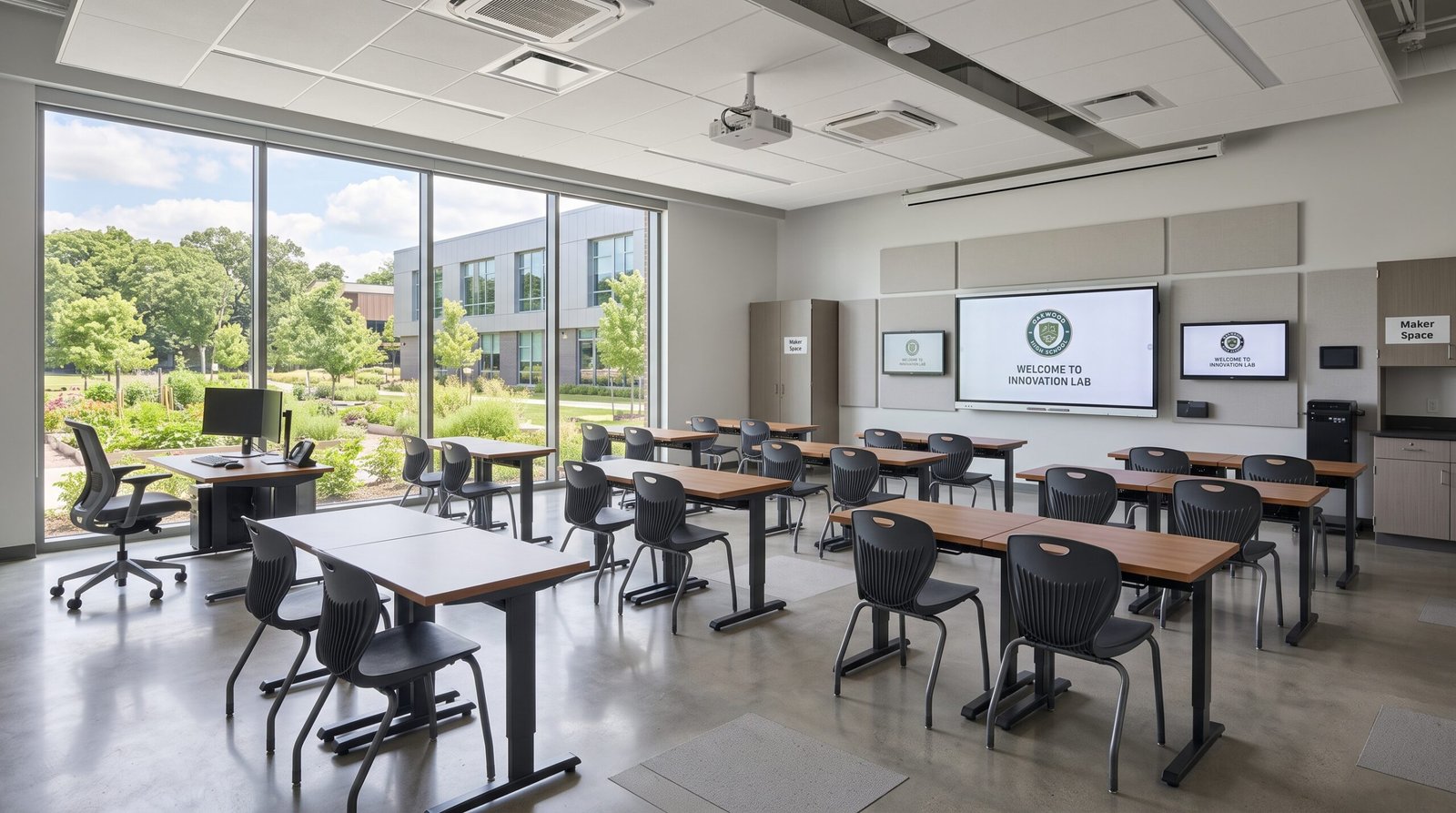
Walk into any exceptional high school, and you’ll notice something before you even hear a single lesson: the classroom itself teaches.
The way desks are arranged. The colors on the walls. The way supplies are labeled and stored. The way technology is positioned. These aren’t accidents — they’re deliberate choices made by thoughtful educators who understand that space shapes behavior, engagement, and learning outcomes.
Whether you’re setting up your very first classroom, stepping into a new school, or simply ready to rethink what you’ve been doing for the past decade, this guide was built for you. You’ll find real, actionable strategies from experienced teachers — not Pinterest fantasy boards that fall apart by Week 2.
Let’s build a high school classroom that works.
Why Your High School Classroom Environment Matters
How Space Affects Student Learning and Behavior
A high school classroom isn’t just four walls and a whiteboard. It’s an environment that silently communicates expectations, culture, and care to every student who walks through the door.
Research consistently shows that physical learning environments have a direct impact on student attention spans, behavior patterns, and academic achievement. Overcrowded, disorganized, or visually chaotic classrooms increase cognitive load — making it harder for students to focus and retain information.
Teenagers, in particular, are highly sensitive to their environment. A classroom that feels sterile and rigid often produces passive, disengaged learners. One that feels organized, inviting, and purposefully designed tends to produce the opposite.
The Link Between Classroom Design and Academic Performance
Studies from organizations like ASCD and Edutopia have shown that classroom design affects:
- Attention and focus — Clear zones for different activities reduce distraction
- Collaboration — Layout directly influences how often students work together
- Teacher effectiveness — A well-organized space allows teachers to spend more time teaching, less time managing logistics
- Student ownership — When students feel the space reflects and respects them, they invest more
Bottom line: designing your classroom intentionally is one of the highest-leverage things you can do before a single lesson is taught.
High School Classroom Layout Ideas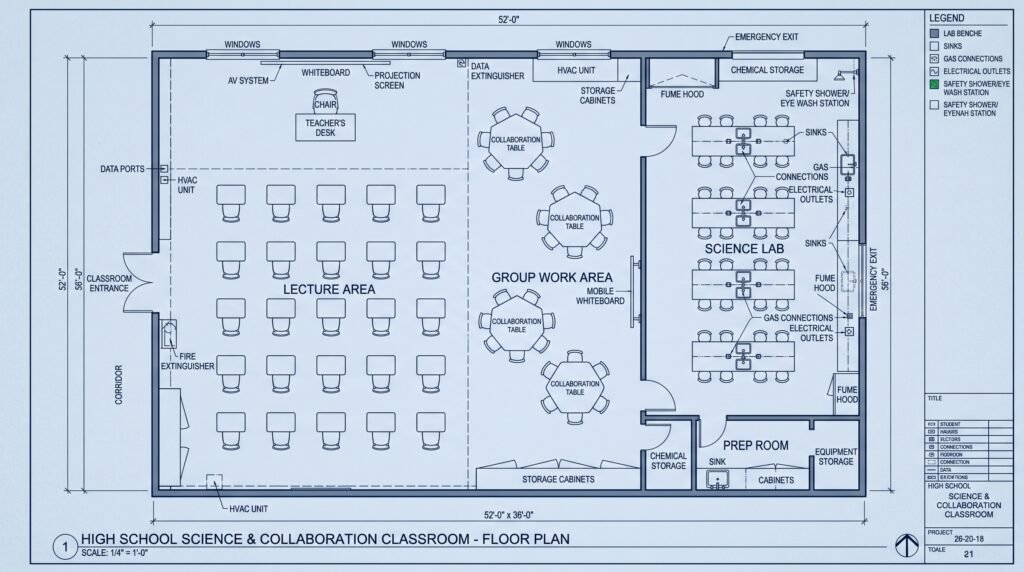
Layout is the backbone of everything else. Before you hang a single poster or label a single bin, you need to decide how the room will function physically.
Traditional Row Layout — Pros and Cons
Pros:
- Easy to manage whole-class instruction
- Students face the board
- Simple to monitor student behavior
Cons:
- Discourages collaboration
- Creates a passive learning dynamic
- Not ideal for discussion-based or project-based classes
Best for: Test prep classes, lecture-heavy content, standardized test environments
Cluster/Pod Seating Layout
Groups of 3–5 desks pushed together to form “pods” or “tables.” This is one of the most popular layouts in modern secondary classrooms.
Pros:
- Encourages peer collaboration
- Easy to switch between group and individual work
- Builds classroom community
Cons:
- Can increase off-task conversations if not managed well
- Requires strong classroom management from the teacher
Best for: Project-based learning, discussion-heavy classes, ELA, social studies
U-Shape or Horseshoe Layout
All desks arranged in a large U-shape, with the teacher at the open end.
Pros:
- Excellent for Socratic seminars and class discussions
- Teacher can reach every student easily
- Every student can see every other student
Cons:
- Uses a lot of floor space
- Not ideal for group work without rearranging
Best for: Debate, philosophy, AP classes, ELA seminars
Flexible Classroom Layout (The Best Option for 2025–2026)
A flexible layout doesn’t lock you into one arrangement. Instead, you design the room so it can shift between configurations quickly and quietly.
This is the approach most recommended by veteran educators. As one experienced teacher explains: keeping flexibility in mind at all points — flexible seating, flexible use of spaces, and flexible lighting — is incredibly helpful when navigating changing expectations and situations in the classroom.
How to Build a Flexible Layout:
- Use lightweight desks or chairs with attached tablets
- Designate a “whole class” position and a “group work” position for desks
- Create clear zones: independent work zone, collaboration zone, quiet reading zone
- Practice “desk transitions” with students in the first week
High School Classroom Decor Ideas That Actually Work
Decor matters — but only when it serves a purpose. Here’s how to decorate like an experienced teacher rather than a first-year Pinterest dreamer.
Minimalist Classroom Decor
Less visual clutter = more student focus. A minimalist classroom uses:
- Neutral base colors (whites, creams, soft grays)
- Strategic pops of one or two accent colors
- Only meaningful wall displays (student work, anchor charts, word walls)
- Clear, uncluttered sight lines to the board
This approach is especially powerful for students with ADHD, anxiety, or sensory sensitivities.
Nature-Inspired and Botanical Themes
One of the strongest trends going into the 2026–2027 school year is the shift toward natural, organic design in classrooms. Think earthy tones, soft greens and browns, real plants, and natural textures. This aesthetic creates a calming, grounded environment that helps students regulate and focus — particularly effective for high-stress academic environments like AP or IB classrooms.
Student Work Display and Gallery Walls
One of the most powerful things you can put on your classroom walls is your students own work. A rotating gallery wall:
- Builds student ownership and pride
- Makes the classroom feel alive and evolving
- Signals that student effort is valued
Rotate displays monthly or by unit. Include a variety of work types: written pieces, visual projects, infographics, photography.
Color Psychology in the Classroom
- Blue/green tones: Calming, focus-enhancing — ideal for reading corners or quiet zones
- Yellow accents: Energy and optimism — use sparingly (too much can cause anxiety)
- White/neutral base: Reduces overwhelm, maximizes flexibility
- Warm wood tones: Safety and comfort — great for furniture choices
Classroom Organization Tips for High School Teachers
A disorganized classroom costs you 15–20 minutes per day in lost instructional time. Here’s how to build systems that run themselves.
Student Supply Organization
Give each student — or each group — a clearly labeled storage zone. Options include:
- Hanging file folders organized by period
- Color-coded bins by class or subject
- Individual desk caddies with supplies
- A central supply station that students access as needed
The goal is reducing the time students spend looking for materials, which directly reduces off-task behavior.
Teacher Desk and Station Setup
Your teaching station should contain everything you need for a full instructional day within arm’s reach:
- Lesson plans for the week
- Essential tech (laptop, clicker, document camera)
- Whiteboard markers and erasers
- Timer visible to students
- Behavior tracking tools or clipboard
Many effective high school teachers actually move away from a traditional “teacher desk” entirely, replacing it with a mobile cart or small station that allows them to circulate more freely.
Labeling and Storage Systems
Label everything. Bookshelves, cabinets, drawers, bins, baskets. When students know where things belong, they can help maintain order without being asked.
Best labeling tools:
- Label maker (Dymo or Brother P-Touch)
- Printed and laminated labels
- Color-coded sticker systems by period or class
Technology in the Modern High School Classroom
Smart Boards and Interactive Displays
Interactive displays are now standard in most high school classrooms. To maximize their effectiveness:
- Position them where every student has a clear sight line
- Minimize window glare with blinds or anti-glare film
- Train students to use them for presentations, not just the teacher
Device Management and Placement
If students use tablets or laptops:
- Create a clear charging station with labeled spots
- Establish device pick-up and drop-off routines from Day 1
- Use a visual signal system for “devices open” vs. “devices closed” moments
Position computers and tablets where students can use them safely, and avoid high-traffic areas that might cause accidents.
Classroom Tech Checklist for 2025–2026
- Smart board or interactive display functioning
- All student devices charged and accounted for
- Wi-Fi connectivity tested in all areas of room
- Backup plan for tech failures (printed materials ready)
- Learning Management System (LMS) set up and tested
- Document camera positioned at teaching station
High School Classroom Management Strategies
No setup guide is complete without addressing management. The best-designed classroom in the world will fall apart without clear systems for behavior and culture.
Setting Rules and Expectations from Day One
In the first week:
- Co-create 3–5 class norms with students (buy-in = compliance)
- Post those norms visibly in the classroom
- Practice procedures explicitly: entering, transitioning, getting supplies, asking for help
- Review expectations after each break (winter, spring, fall)
Building a Positive Classroom Culture
High school students need to feel respected before they’ll engage. Build culture by:
- Learning every student’s name by Day 3
- Displaying student work from the very first assignment
- Acknowledging effort publicly, correcting behavior privately
- Using restorative practices instead of punitive-only responses
Handling Transitions and High-Traffic Moments
Transitions (class beginnings, activity switches, dismissal) are when most classroom management breaks down. Prevent it by:
- Using a consistent “bell ringer” or “do now” activity at the start of every class
- Setting a visible timer for transitions
- Assigning roles during group work transitions
- Using a call-and-response or signal system to regain attention quickly
Flexible Seating for High School
What Is Flexible Seating?
Flexible seating is the practice of offering students choices about where and how they sit during class — moving beyond the one-desk-per-student traditional model. It’s been widely adopted in elementary classrooms and is increasingly making its way into secondary spaces.
Best Flexible Seating Options for High School Students
| Seating Type | Best For |
|---|---|
| Standing desks | Students who need to move/fidget |
| Floor cushions or poufs | Reading circles, small group discussions |
| Wobble stools | Focus-challenged learners |
| Collaborative tables | Project-based learning pods |
| Couch or lounge seating | Independent reading corner |
| Standard desks (still included) | Tests, direct instruction |
How to Implement Flexible Seating Without Chaos
- Introduce it gradually — Don’t offer all options on Day 1
- Teach the expectations — Flexible seating is a privilege with clear rules
- Start with a trial period — “We’ll try this for two weeks and evaluate”
- Let students self-select based on their task — Not just preference
- Have a reset plan — A signal that means “return to assigned seat”
High School Classroom Setup on a Budget
You don’t need a big budget to build a great classroom. You need clarity and creativity.
Free and Low-Cost Decor Ideas
- Use student work as the primary wall decoration
- Print free anchor charts from Teachers Pay Teachers (many freebies available)
- Use washi tape to create borders, zones, and labels cheaply
- Borrow from the library — Books, maps, and display items often available
Where to Shop for Classroom Supplies
| Store | What to Buy |
|---|---|
| Dollar Tree | Bins, baskets, small organizers |
| Target (Dollar Spot) | Stickers, folders, seasonal decor |
| Amazon | Bulk supplies (pens, markers, labels) |
| IKEA | Shelving, storage units, furniture |
| Facebook Marketplace | Rugs, chairs, bookshelves |
| Thrift Stores | Unique decor items, lamps, plants |
Grant Opportunities for Classroom Upgrades
- DonorsChoose.org — Post a project, donors fund it
- ISTE Grants — For technology integration
- NEA Foundation Student Achievement Grants — Up to $5,000
- Local community foundations — Often have educator mini-grants
- Your school’s PTA/PTO — Often overlooked source of classroom funding
FAQ’s About High School Classrooms
Q: What is the best layout for a high school classroom?
There is no single “best” layout — it depends on your teaching style and subject. However, flexible layouts and cluster seating are widely recommended because they allow the room to adapt to different activities, from whole-class instruction to small group collaboration.
Q: How do I make my classroom feel welcoming for high schoolers?
Display student work from day one, learn names quickly, co-create classroom norms, and prioritize student voices in the space. Teens respond to being respected and seen — design choices that reflect that go a long way.
Q: What technology should I have in my high school classroom?
At minimum: a reliable projector or smart board, student devices (laptops or tablets), and a strong Wi-Fi connection. Beyond that, document cameras, digital timer displays, and a learning management system (LMS) are highly valuable.
Q: How do I organize my high school classroom without spending a lot of money?
Start with free resources: label everything you already have, reorganize existing furniture, download free printable labels and anchor charts, and declutter anything you don’t use. Organization is more about systems than stuff.
Q: How do high school classroom layouts affect student behavior?
Research consistently shows that layout influences behavior significantly. Rows can create passive, disengaged behavior; cluster seating encourages collaboration but can increase distraction. The key is matching layout to your instructional approach and teaching students to use the space responsibly.
Q: Should I use flexible seating in high school?
Yes — when implemented thoughtfully. Start slowly, teach the expectations clearly, and tie seating choices to task types. High school students often respond very positively to being given autonomy in their learning space.
Conclusion:
Make Your Classroom Work for You and Your Students
Your high school classroom is more than a room. It’s a culture, a system, and a signal to every student about what kind of learning happens here.
You don’t need to overhaul everything overnight. Start with your layout. Then your organization systems. Then layer in decor, technology, and flexible options as you get your footing.
The best classrooms aren’t the most decorated — they’re the most intentional.
And the best teachers aren’t the ones with the biggest budgets — they’re the ones who think carefully about how every inch of their space serves their students.
You’ve got this. Now go build something great.