 By DSP Staff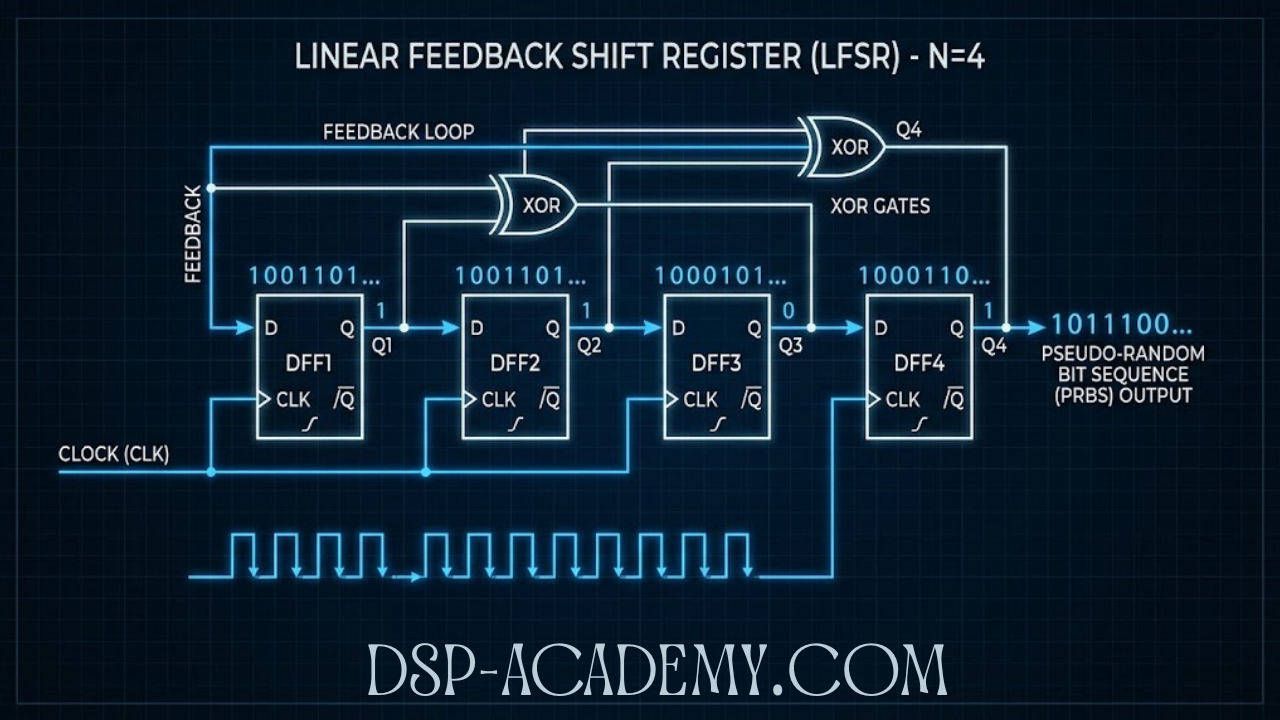
Introduction
Ever wondered how your GPS finds your exact location in seconds, or how audio engineers test a room’s acoustics with weird static-like noise? The answer is a maximum length sequence, often shortened to MLS. This pattern shows up in radar, satellite navigation, encryption, and sound testing—yet almost nobody outside engineering knows it exists.
In this guide, you’ll learn what a maximum length sequence actually is, how it differs from simple number patterns, where MLS signals get used in the real world, and how to start working with them yourself. By the end, you’ll understand why this obscure-sounding concept quietly runs so much of modern technology.
Let’s break it down simply.
Table of Contents
- What Is a Maximum Length Sequence?
- Why Does a Maximum Length Sequence Matter?
- Maximum Length Sequence — Key Facts and Types
- How to Generate a Maximum Length Sequence
- Common Mistakes and Myths About MLS
- Expert Tips for Best Results
- Frequently Asked Questions
What Is a Maximum Length Sequence?
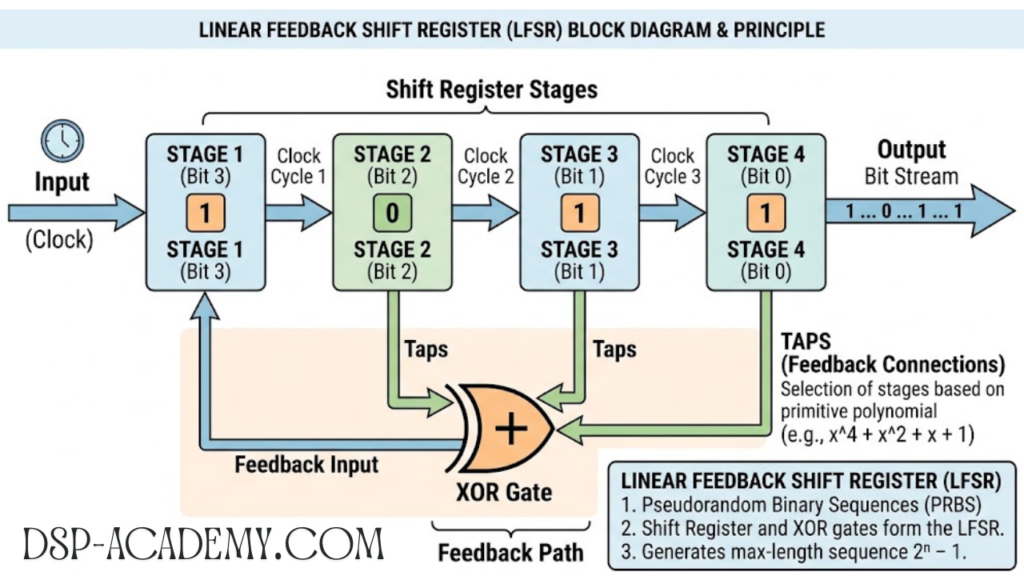
A maximum length sequence is a type of pseudo-random binary sequence generated using a special digital circuit called a linear feedback shift register (LFSR). In plain terms, it’s a string of 1s and 0s that looks random but actually repeats after a very specific, very long period.

Think of it like a deck of cards shuffled by a machine that follows a secret rule. The order looks scrambled, but if you shuffled that exact same deck the same way again, you’d get the identical order every time. That’s the core idea behind a maximum length sequence—it’s predictable to the machine that made it, but appears random to everyone else.
A real-world analogy: imagine a spinning combination lock with millions of possible positions. It cycles through every single position exactly once before repeating. That’s what makes it “maximum length”—it hits the longest possible sequence before looping back to the start.
Why Does a Maximum Length Sequence Matter?
A maximum length sequence isn’t just an academic curiosity—it solves real engineering problems every day.
- Signal testing: Engineers use MLS signals to measure how speakers, microphones, and rooms respond to sound, since the sequence covers all frequencies evenly.
- GPS accuracy: Satellite navigation systems rely on MLS-based codes so receivers can lock onto the correct satellite signal instantly.
- Data encryption: Because the pattern looks random but isn’t, MLS forms the backbone of certain stream ciphers and secure communication systems.
- Noise generation: Audio and RF engineers generate white-noise-like signals for calibration using MLS.
- Error detection: Digital communication systems use MLS to test whether transmitted data arrived correctly.
According to research published by the Audio Engineering Society, MLS-based measurement techniques can achieve signal-to-noise ratios over 60 dB, far outperforming older impulse-testing methods.
That’s a huge reason engineers still choose MLS over newer alternatives in many labs today.
Maximum Length Sequence — Key Facts and Types
A maximum length sequence is built from shift registers of different lengths, called “stages” or “taps.” The number of stages determines how long the sequence runs before repeating. The formula is simple: length = 2^n − 1, where n is the number of register stages.

Common MLS Lengths
| Register Stages (n) | Sequence Length (2ⁿ−1) | Typical Use |
|---|---|---|
| 5 | 31 | Basic testing |
| 7 | 127 | Small-scale audio testing |
| 10 | 1,023 | GPS coarse acquisition codes |
| 16 | 65,535 | Room acoustics measurement |
| 20 | 1,048,575 | High-precision RF testing |
Key Properties of MLS Signals
MLS signals have three defining traits: they’re periodic (they repeat after a fixed length), they’re balanced (roughly equal numbers of 1s and 0s), and they have a flat frequency spectrum, meaning they contain nearly equal energy across all frequencies—similar to white noise.
This flat spectrum is exactly why audio engineers love them. A single MLS test blast can reveal a room’s full acoustic behavior in seconds, something that used to take much longer with older methods.
How to Generate a Maximum Length Sequence
- Choose your register length. Decide how many stages (n) you need based on your application—more stages mean a longer, more complex sequence.
- Select valid feedback taps. Not every tap combination produces a true maximum length sequence, so you’ll need to reference a primitive polynomial table for your chosen length.
- Initialize the shift register. Load it with any non-zero starting value—an all-zero seed will break the sequence and produce nothing useful.
- Run the clock cycles. Each clock pulse shifts the bits and feeds the XOR result back into the register, generating one new bit per cycle.
- Record the output bit stream. Capture each output bit in order until the sequence completes its full 2^n − 1 cycle.
- Verify the sequence. Check that it never repeats early and that the ratio of 1s to 0s stays balanced, confirming it’s a true maximum length sequence.
This process can be done in software (Python, MATLAB) or hardware (actual shift register chips), depending on your project.
Common Mistakes and Myths About MLS
Myth: MLS signals are truly random. They’re not—they’re deterministic and repeatable, which is exactly what makes them useful for controlled testing.
Mistake: Using an all-zero seed value. This “locks” the shift register and produces no meaningful output at all, so always start with a non-zero value.
Myth: Longer sequences are always better. Longer MLS signals take more time to run and process, so match the length to your actual testing needs.
Mistake: Ignoring feedback tap tables. Random tap choices rarely produce a true maximum length sequence—you need mathematically verified primitive polynomials.
Myth: MLS is outdated technology. It’s still actively used in GPS, audio calibration, and cryptographic applications in 2026.
Expert Tips for Best Results
- Match sequence length to your bandwidth needs—shorter sequences work fine for quick tests.
- Always double-check your feedback taps against a verified primitive polynomial table before running anything.
- Use software libraries like Python’s
scipyor MATLAB’s Communications Toolbox to save setup time. - Average multiple MLS runs when measuring acoustics to reduce background noise interference.
- Document your register configuration so results stay reproducible for future testing.
Frequently Asked Questions
What is a maximum length sequence?
A maximum length sequence is a binary pattern generated by a shift register circuit that cycles through every possible non-zero state before repeating. It looks random but is fully predictable and reproducible, which makes it valuable for testing, encryption, and satellite navigation systems like GPS.
What type of sequence is 3, 6, 9, 12, 15?
This is an arithmetic sequence, not a maximum length sequence. Each number increases by a fixed amount (3), which is a simple linear pattern. It has no connection to binary shift registers or pseudo-random signal generation used in MLS.
What are MLS signals used for?
MLS signals are used for testing audio equipment, measuring room acoustics, generating GPS satellite codes, and supporting encryption systems. Their flat frequency spectrum makes them ideal for revealing how systems respond across a full range of frequencies quickly and accurately.
Bonus: 5 Examples of Sequences
To put maximum length sequences in context, here are five different sequence types:
- Arithmetic sequence: 3, 6, 9, 12, 15 (constant difference)
- Geometric sequence: 2, 4, 8, 16, 32 (constant ratio)
- Fibonacci sequence: 1, 1, 2, 3, 5, 8 (sum of previous two)
- Maximum length sequence: 1,0,0,1,1,1,0 (pseudo-random binary, period 2ⁿ−1)
- Prime number sequence: 2, 3, 5, 7, 11 (numbers divisible only by 1 and themselves)
Conclusion
A maximum length sequence might sound technical, but its impact touches your daily life through GPS accuracy, audio testing, and secure data transmission. The three biggest takeaways: MLS signals are predictable, not random; they’re built using shift registers and specific tap configurations; and they remain essential in 2026 despite being decades-old technology.
Start experimenting today—try generating a simple MLS in Python with just 5 register stages and see the pattern for yourself. Have you ever worked with MLS in a project? Share your experience in the comments below.