 By DSP Staff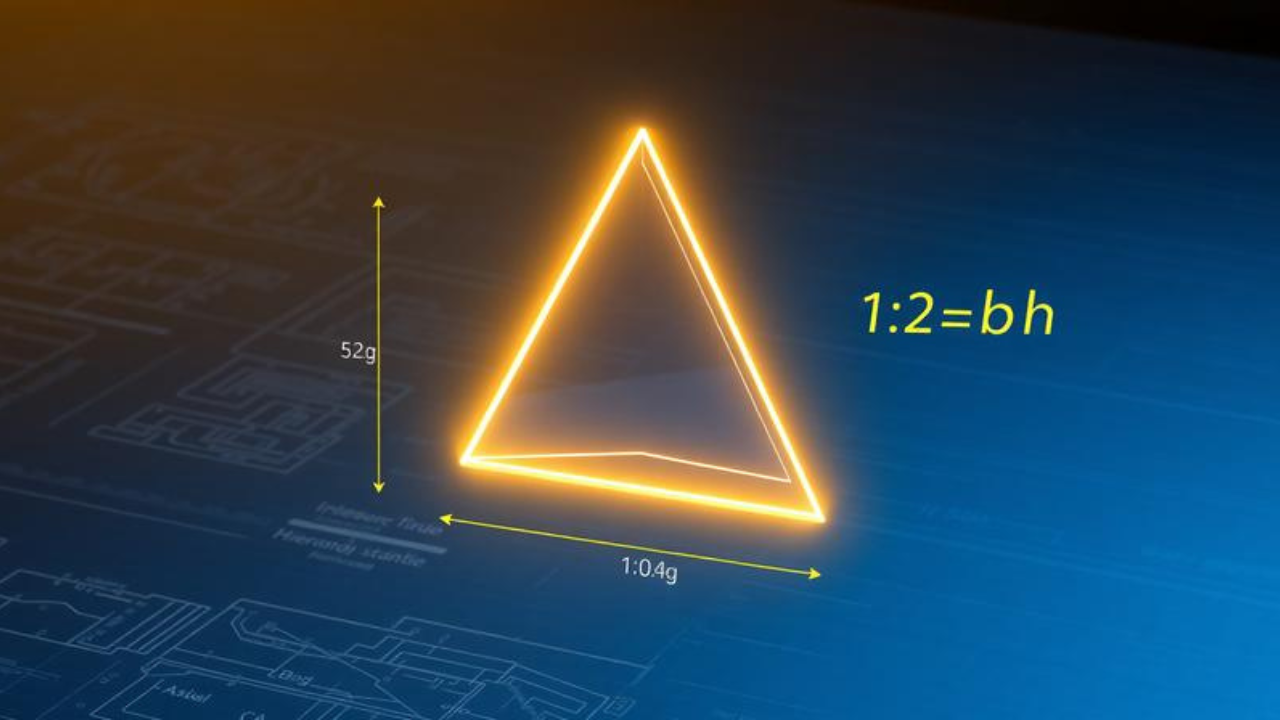
Master the formulas that build skyscrapers, survey nations, and hide in plain sight—no PhD required.
Introduction
Picture this: You’re standing in a vast field, phone dead, GPS useless. Someone hands you a measuring tape and says, “Figure out how much land we’re standing on.” No Wi-Fi. No calculator app. Just you, three straight lines, and a problem that has stumped humanity for millennia—until a Greek mathematician cracked the code.
That problem? How to find the area of a triangle.
Here’s the thing: triangles are everywhere. They hold up bridges, shape the roofs over our heads, and determine how much paint you need for that accent wall. Yet most of us freeze when faced with the actual calculation. Why? Because we were taught one formula and told to memorize it—but triangles are more clever than that.
The good news? You don’t need to be a math whiz to master this. Whether you’re a student cramming for exams, a DIY enthusiast planning a project, or just someone who wants to finally understand what all those squiggly symbols mean—this guide is for you.
By the time you finish reading, you’ll know not just how to find the area of a triangle, but why it matters, when to use each formula, and how to impress your friends with geometry facts that go back nearly two thousand years.
Background: Why Triangles Rule the World
Let’s start with a bold claim: The triangle is the most important shape in human history.
Think about it. The ancient Egyptians used triangles to survey land after the Nile flooded. The Greeks built their temples around triangular proportions. Today, triangles form the backbone of modern engineering—from the trusses in your attic to the wings of an airplane.
But here’s what’s fascinating: the formula for the area of a triangle has been around for millennia, yet most people only know one version of it. The basic formula—Area = ½ × base × height—is elegant in its simplicity. But it’s just the tip of the iceberg.
Why does this matter right now? Because we live in a three-dimensional world built on two-dimensional foundations. Architects calculate triangular areas to determine material costs. Land surveyors use triangle formulas to measure property boundaries. Carpenters figure out how much flooring they need for triangular rooms. Even GPS navigation relies on triangulation—the art of using triangles to pinpoint your location.
The triangle isn’t just a shape. It’s the shape. And understanding how to find its area isn’t just a math exercise—it’s a life skill.
The Golden Rule: Area = ½ × Base × Height
Let’s start with the formula everyone knows—and the one most people get wrong.
Area = ½ × base × height
That’s it. Half the base times the height. But here’s where the confusion begins: the base and height must be perpendicular to each other.
What Does “Perpendicular” Mean?
Imagine a triangle sitting on a table. The base is the side on the bottom. The height is the vertical distance from that base straight up to the opposite point (the vertex). Not along the side—straight up, like a plumb line.
Example: You have a triangle with a base of 10 cm and a height of 6 cm.
-
Area = ½ × 10 × 6 = 30 square cm
But Wait—What If the Triangle Is Pointing Sideways?
The base can be any side of the triangle. The height is always the perpendicular distance from that base to the opposite vertex. Pick the side that makes your life easiest.
Example: A right triangle with legs of 3 and 4 units.
-
Use one leg as the base (3), the other as the height (4)
-
Area = ½ × 3 × 4 = 6 square units
Pro Tip: This formula works for every triangle—scalene, isosceles, equilateral, right, obtuse, acute. The only requirement? You need to know the height.
What If You Don’t Know the Height? Enter Heron’s Formula
Here’s a scenario that happens all the time: You know the lengths of all three sides of a triangle, but you don’t know the height. Maybe you’re measuring a plot of land, and you can’t exactly drop a plumb line through someone’s fence.
This is where Heron’s Formula saves the day.
Named after Heron of Alexandria, a Greek mathematician who flourished around 62 CE, this formula lets you calculate the area of a triangle using only the side lengths. Some scholars believe the formula may actually date back to Archimedes (287–212 BCE). Either way, it’s been around for nearly 2,000 years.
Heron’s Formula Step-by-Step
-
Find the semi-perimeter (s): Add all three sides and divide by 2.
-
s = (a + b + c) ÷ 2
-
-
Plug into the formula:
-
Area = √[s × (s − a) × (s − b) × (s − c)]
-
Example
You have a triangle with sides of 5, 6, and 7 units.
-
Step 1: s = (5 + 6 + 7) ÷ 2 = 9
-
Step 2: Area = √[9 × (9 − 5) × (9 − 6) × (9 − 7)]
-
Area = √[9 × 4 × 3 × 2] = √[216] ≈ 14.7 square units
Fun Fact: Heron’s formula appears in his book Metrica, a text on calculating areas and volumes. A fragment was discovered in 1894, and a complete copy in 1896, reviving interest in his work. The formula was later extended by the 7th-century Indian astronomer Brahmagupta to cyclic quadrilaterals.
The Trigonometry Shortcut: Two Sides and an Included Angle (SAS)
What if you know two sides of a triangle and the angle between them, but not the height? Trigonometry to the rescue.
Area = ½ × a × b × sin(C)
Where a and b are two sides, and C is the angle between them.
Where Does This Come From?
Remember that height we struggled to find? If you know side b and the angle C, the height is simply b × sin(C). Plug that into the basic formula, and you get the SAS version.
Example
You have a triangle with sides of 7 and 10, and the angle between them is 25°.
-
Area = ½ × 7 × 10 × sin(25°)
-
Area = 35 × 0.4226 ≈ 14.8 square units
Pro Tip: The formula can be written in three equivalent ways, depending on which sides and angle you know:
Area = ½ × a × b × sin(C)
Area = ½ × b × c × sin(A)
Area = ½ × c × a × sin(B)
Special Cases: Right, Isosceles, and Equilateral Triangles
Right Triangles
If your triangle has a 90° angle, life gets even easier. The two legs that form the right angle are your base and height.
Example: A right triangle with legs of 6 and 8.
-
Area = ½ × 6 × 8 = 24 square units
Isosceles Triangles
Two sides equal. To find the height, drop a line from the top vertex to the middle of the base—this splits the triangle into two right triangles. Then use the Pythagorean theorem.
Example: Equal sides of 5, base of 6.
-
Height = √[5² − (6/2)²] = √[25 − 9] = √16 = 4
-
Area = ½ × 6 × 4 = 12 square units
Equilateral Triangles
All sides equal, all angles 60°. There’s a special formula just for this:
Area = (√3 ÷ 4) × a²
Where a is the length of any side.
Example: An equilateral triangle with side length 6.
-
Area = (√3 ÷ 4) × 36 ≈ 15.59 square units
-
How to Find the Area of a Triangle – dsp-academy
The Counterargument: Is All This Math Really Necessary?
Let’s pause for a moment of honesty.
You might be thinking: “This is all well and good, but when am I actually going to use this?”
Fair question. And here’s the answer: more often than you think.
Critics of geometry education argue that we spend too much time on formulas and not enough on practical application. And they’re not entirely wrong. Memorizing Heron’s formula without understanding why it works is like owning a hammer without knowing how to swing it.
But here’s the nuance: the ability to calculate area isn’t about the formula—it’s about problem-solving. When you learn to find the area of a triangle, you’re learning to:
-
Identify what information you have
-
Determine what you still need
-
Choose the right tool for the job
-
Execute with precision
These skills transfer to everything—from budgeting to project management to everyday decision-making.
The real question isn’t “Will I ever use this?” It’s “What kind of problems am I preparing myself to solve?”
Actionable Takeaways
-
Start with the basics. If you have the base and height, use Area = ½ × base × height. It works for every triangle.
-
Know your sides? Use Heron. When you only have the three side lengths, Heron’s formula is your best friend.
-
Got two sides and an angle? Go SAS. The trigonometry formula Area = ½ × a × b × sin(C) is a lifesaver.
-
Special triangles have shortcuts. Right triangles use legs as base and height. Equilateral triangles use (√3/4) × a².
-
Always check your units. Area is always in square units—square meters, square feet, square inches.
-
When in doubt, draw it out. A quick sketch can help you identify which formula to use.
Frequently Asked Questions
What is the formula for the area of a triangle?
The most common formula is Area = ½ × base × height. Other formulas include Heron’s formula for when you know all three sides, and the SAS formula Area = ½ × a × b × sin(C) for when you know two sides and the included angle.
How do you find the area of a triangle without height?
Use Heron’s formula: Area = √[s(s−a)(s−b)(s−c)], where s is the semi-perimeter. Alternatively, if you know two sides and the included angle, use Area = ½ × a × b × sin(C).
How do you find the area of an equilateral triangle?
Use the special formula: Area = (√3/4) × a², where a is the length of any side.
How do you find the area of a right triangle?
Use the two legs that form the right angle as your base and height: Area = ½ × leg₁ × leg₂.
What is Heron’s formula used for?
Heron’s formula is used to calculate the area of a triangle when you know the lengths of all three sides but don’t know the height. It’s especially useful in land surveying and construction.
Why is the area of a triangle half the base times the height?
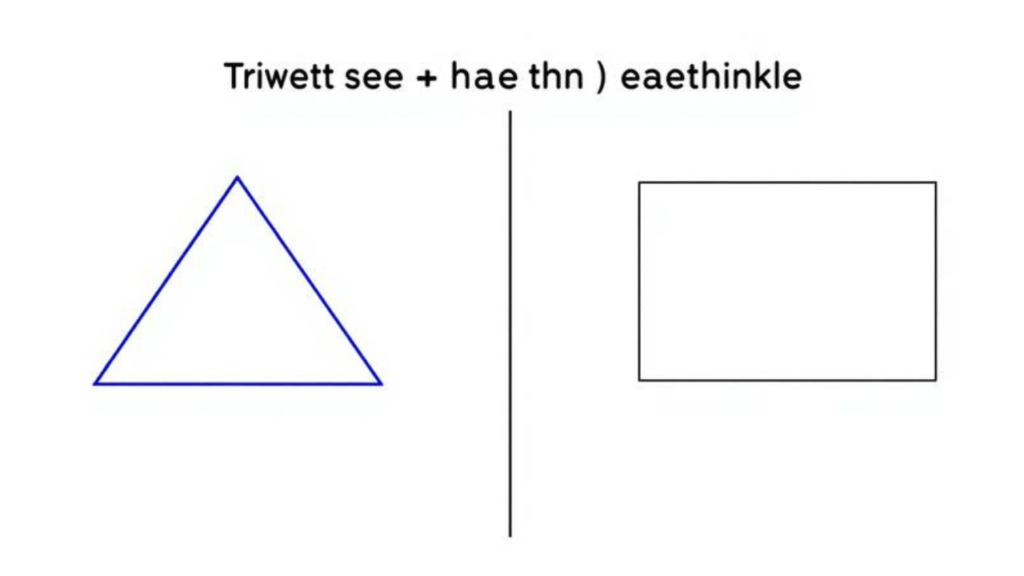
A triangle is exactly half of a rectangle (or parallelogram) with the same base and height. So its area is half the rectangle’s area.
Can I use an online calculator to find the area of a triangle?
Absolutely. Online triangle calculators can compute area using base and height, Heron’s formula, or SAS. They’re especially useful when dealing with complex numbers or multiple calculations.
Conclusion
The triangle is humanity’s oldest geometric obsession. From the pyramids of Egypt to the trusses of modern skyscrapers, this three-sided wonder has shaped our world in ways we rarely stop to appreciate.
And at the heart of it all is a simple question: How much space does it take up?
Whether you’re using the basic formula—half the base times the height—or diving into the ancient elegance of Heron’s formula, you’re participating in a tradition that spans nearly two millennia. You’re solving the same problem that Archimedes may have solved, that Heron wrote down in Metrica, that surveyors and architects use every single day.
The formulas are tools. But the real skill—the one that matters—is knowing which tool to reach for.
So the next time you see a triangle—in a bridge, a roof, a piece of art, or a math problem—remember: you now hold the key to unlocking its secrets.
And that’s a pretty powerful thing.
What’s the most unexpected place you’ve encountered a triangle? Drop a comment below—I’d love to hear your stories.