 By DSP Staff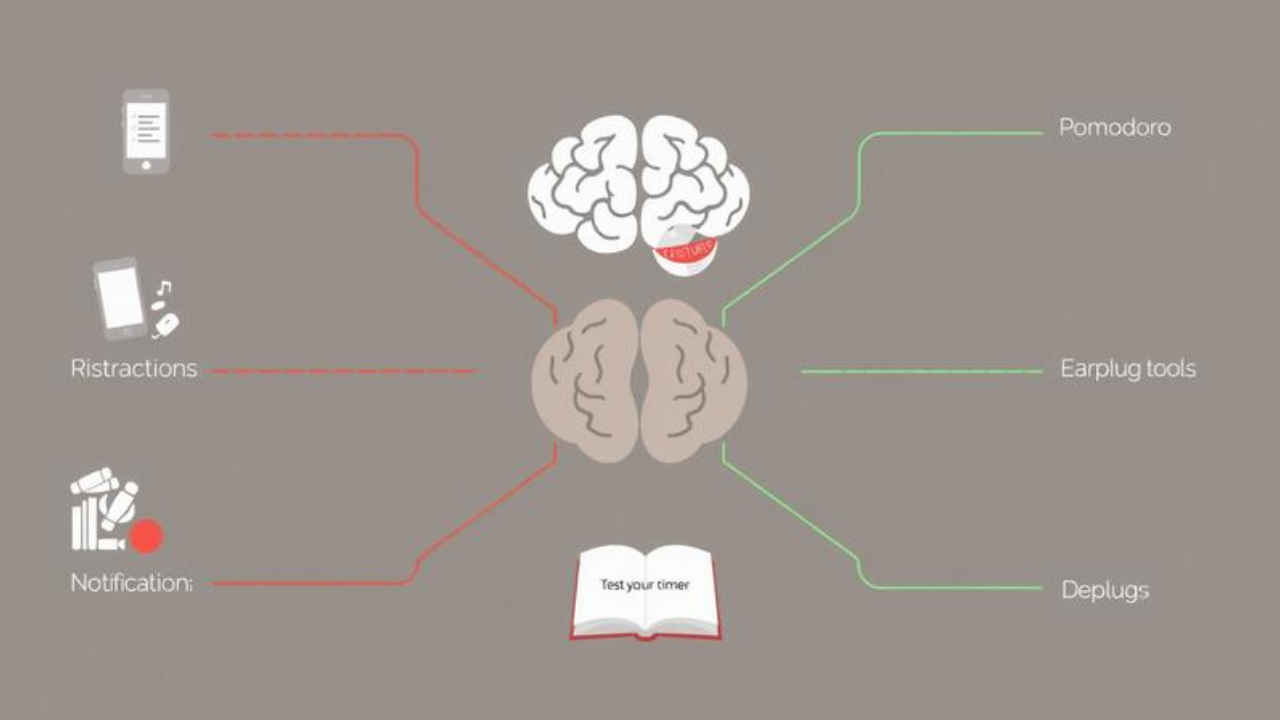
INTRODUCTION
You sit down to study. Textbook open. Notes ready. Coffee within reach. You tell yourself: “This time, I’m really going to focus.”
Three minutes later, your phone buzzes. You glance at it—just a notification. But now you’re thinking about who texted you. Then you remember you meant to check that one email. Then a YouTube recommendation catches your eye. “Just five minutes,” you tell yourself. Forty-five minutes later, you’ve watched three videos about why whales sing and you can’t remember a single thing from page one.
Sound familiar? You’re not alone. A UNESCO study across 14 countries found that it takes a student an average of 20 minutes to refocus after receiving a single text message. Meanwhile, research from UC Irvine shows that the average attention span on a single digital task has plummeted to just 47 seconds. In China, 79% of university students admit to playing mobile games during class, spending roughly a third of their lecture time on their phones. Globally, 65% of students report being distracted by their own phones during class, and 59% by their classmates’ phones.
Here’s the uncomfortable truth: distraction isn’t a personal failing—it’s a design feature of the modern world. Your phone, your apps, and even your own brain are wired to pull you away from what matters. But that doesn’t mean you’re powerless. The science of attention reveals that focus isn’t a fixed trait—it’s a skill. And like any skill, it can be trained.
This article isn’t about willpower. It’s about strategy. By the time you finish reading, you’ll understand exactly why you get distracted, how your brain actually works, and—most importantly—what you can do about it.
Why This Matters Right Now
We are living through what one economist has called a “collective disease” of digital distraction. The numbers are staggering. The average person now picks up their phone nearly 150 times a day. Students toggle between apps every 44 seconds. And the consequences go far beyond wasted time.
A study linking students’ phone usage data with their academic records found that a one-standard-deviation increase in phone use was associated with a 36.2% drop in GPA. Even more alarmingly, the effect didn’t stop at graduation—heavy phone users earned 2.3% less in starting salaries, equivalent to losing half the return on a year of work experience.
But here’s the twist: the problem isn’t just that we’re distracted. It’s that distraction is contagious. The same study found that for every standard-deviation increase in a roommate’s phone use, a student’s own usage rose by 5.8%. When everyone around you is scrolling, it becomes almost impossible not to join in.
The rise of AI is compounding the issue. A 2025 MIT Media Lab study found that students using large language models showed a marked reduction in functional brain connectivity—and 83% of participants could not accurately recall or quote their own work immediately after completing it. We’re outsourcing our thinking, and our ability to focus is paying the price.
The good news? Understanding why we get distracted is the first step to overcoming it. And the science of attention has never been clearer.
The Neuroscience of Distraction—Why Your Brain Betrays You
It’s Not Your Fault. Really.
Let’s start with a liberating fact: your brain was not designed for sustained focus. It was designed for survival—scanning the environment for threats, novelty, and rewards.
Neuroscientists have identified two primary brain networks at play: the Default Mode Network (DMN) and the Central Executive Network (CEN) . The DMN is your brain’s “default” state—the wandering, daydreaming, what-should-I-have-for-dinner mode. Research shows that for about 50% of our waking hours, our brains are in this state. The CEN, on the other hand, is what you use when you’re actually focusing on a task.
Here’s the kicker: even when you are focused, your brain is constantly scanning for distractions. Neuroscientist Fiebelkorn discovered that our attention oscillates in waves, scanning for potential threats or opportunities about four times per second. Every fraction of a second, your brain is asking: “Is there something more important or interesting than this textbook?”
The Dopamine Trap
Then there’s dopamine—the neurotransmitter that makes you feel good when you discover something new or rewarding. Every swipe, every notification, every refreshing feed delivers a tiny hit of dopamine. Your brain learns that checking your phone = reward. So it keeps sending you the urge to check, even when there’s nothing there.
Behavioral design expert Nir Eyal puts it bluntly: only about 10% of phone checks are triggered by external notifications. The other 90% come from internal triggers—boredom, anxiety, loneliness, or simply the discomfort of not knowing what you might be missing.
“The core of distraction isn’t external devices,” Eyal explains. “It’s the emotions we’re trying to escape”.
The 20-Minute Rule
Once you do get distracted, the cost is steep. Research consistently shows that after an interruption, it takes an average of 20 to 25 minutes to fully regain focus on your original task. That means a single text message doesn’t just steal five seconds—it steals nearly half an hour of productive time.
The implication is clear: prevention is far more effective than recovery.
The External Battle—Taming Your Environment
Your Phone Is Not Your Friend (During Study Time)
The single most powerful thing you can do to study without getting distracted is remove your phone from your environment. Not silence it. Not put it on Do Not Disturb. Remove it. Put it in another room. Lock it in a drawer. Give it to a friend.
Why? Because even when your phone is silent and face-down, it’s still a distraction. Just seeing it—knowing it’s there—creates a cognitive drain. Your brain is constantly suppressing the urge to check it, which consumes mental energy that should be going to your studies.
As one study guide puts it: “Even one hour of study without distraction is more effective than four hours of study with interruptions”.
Create a Dedicated Study Space
Your environment signals to your brain what to do. A cluttered desk, a comfortable bed, a noisy kitchen—these all send mixed messages. “Study in a space that’s meant for studying,” advises Jeremy Graney, assistant director at Creighton University’s Office of Academic Success.
Choose a quiet, well-lit area with minimal visual clutter. Keep only what you need for the current task on your desk. If you can, make this space consistent—your brain will start to associate it with focus, making it easier to slip into a productive state each time you sit down.
Digital Hygiene
When you’re working on a computer:
-
Close all unnecessary tabs
-
Use website blockers like Forest or Freedom
-
Put your device on airplane mode if you don’t need the internet
-
Turn off all non-essential notifications
As Graney notes: “Going to your phone to find study hacks usually becomes the distraction. Focused, distraction-free time still works best”.
The Body Double Effect
There’s fascinating science behind the concept of “body doubling”—the idea that we’re more likely to focus when we’re around other people who are also focusing. “We’re more likely to mimic what others are doing,” Graney explains. If you’re in a library and everyone around you is studying, you’re far more likely to study too. If you’re in a common room where everyone’s hanging out, don’t expect to get much done.

The Internal Battle—Working With Your Brain, Not Against It
The Pomodoro Technique: Short Bursts, Big Results
Your brain isn’t built for marathon focus sessions. It’s built for sprints. The Pomodoro Technique—developed by Francesco Cirillo in the 1980s—capitalizes on this reality.
Here’s how it works:
-
Set a timer for 25 minutes
-
Work on one task only—no multitasking, no phone
-
When the timer goes off, take a 5-minute break
-
After four rounds, take a longer 15–30 minute break
Why does this work? Because 25 minutes feels manageable. It’s short enough that you can commit to staying focused. The built-in breaks give your brain time to recharge and process information.
Studies have found that taking predetermined, systematic breaks during study sessions has mood benefits and efficiency benefits over taking self-regulated breaks. The Pomodoro Technique helps stretch your mental stamina and reduces the fatigue that leads to distraction.
But What If 25 Minutes Doesn’t Work For You?
The Pomodoro Technique is a starting point, not a prison. Some people find that 25 minutes is too short—they’re just getting into a flow when the timer goes off. Others find it’s too long. Experiment. Try 20 minutes. Try 50 minutes. The key principle is structured work followed by structured breaks.
Active Recall: The Antidote to Passive Reading
One of the biggest mistakes students make is confusing reading with learning. “When you’re looking at your notes and you’re following along with the book, it seems like it makes sense,” Graney explains. “But you’ve never really tested your understanding”.
The solution is active recall—the practice of retrieving information from memory rather than passively reviewing it. “Active recall helps identify where your gaps of understanding are,” Graney says. Try explaining a concept without looking at your notes. ry writing down everything you remember about a topic. Try teaching it to someone else. “If you can explain it, you really understand it”.
Active recall keeps your brain engaged. Passive reading lets your mind wander.
Spaced Repetition: Don’t Cram, Build
Cramming is the enemy of focus. When you cram, you’re trying to force your brain to absorb too much information too quickly. The result? Stress, exhaustion, and poor retention.
“Spaced repetition is great because it slowly builds that foundation,” Graney says. “Our brains need downtime to create those connections”. Spread your study sessions out over days and weeks. Review material regularly. This not only improves retention but also reduces the pressure that leads to distraction.
Mindfulness: Training Your Attention Muscle
Focus is like a muscle—it can be strengthened with practice. Mindfulness meditation is one of the most effective ways to train your attention.
Research shows that mindfulness training strengthens the ability to focus on the present moment, reducing mental distraction and the phenomenon of “mind wandering”. Even short sessions can help. Start with two minutes of focusing on your breath. When your mind wanders—and it will—gently bring it back.
One simple technique: before you start studying, spend 30–60 seconds staring at a fixed point—a pen tip, the edge of your book, a spot on the wall. Keep your gaze steady. Don’t check your phone. You’ll feel your attention begin to gather.
What the Top Performers Do Differently
Mani Mahesh Sharma: Balance Over Grind
When Punjab class 10 topper Mani Mahesh Sharma scored an astonishing 99.23%, his routine surprised many. He didn’t study nonstop. He made time for television, outdoor play, and adequate sleep—while deliberately staying away from social media.
His approach wasn’t about grinding harder. It was about balance, consistency, and avoiding unnecessary distractions.
Avni Kejriwal: Total Immersion
CBSE topper Avni Kejriwal scored a perfect 500/500. Her secret? “When studying, my world stopped there and I made sure there were no distractions”. But equally important: when she wasn’t studying, she refused to let academic pressure isolate her. She played sports and stayed connected with friends.
The Common Thread
Across these success stories, a pattern emerges:
-
Deliberate focus during study time
-
Deliberate rest during break time
-
No half-measures—when studying, study; when resting, rest
“But I Can’t Focus Without Music / Noise / My Phone Nearby”
Let’s be honest: not everyone thrives in complete silence. Some people genuinely concentrate better with background noise or instrumental music. Others find that certain fidget toys help them channel restless energy. And yes, some students do need their phones for flashcards or study apps.
The key isn’t to eliminate everything—it’s to eliminate what distracts you.
If music helps, use it. But choose instrumental music without lyrics, which can compete for your brain’s language processing. If you need your phone for a specific app, put it in airplane mode. If you use a fidget toy, make sure it’s a background activity, not the main event.
Also, be honest with yourself about what’s actually helping versus what’s actually distracting. As Graney warns, “There are a lot of study tips out there. But going to your phone to find them usually becomes the distraction”.
And here’s another nuance: perfect focus doesn’t exist. Even the most disciplined students get distracted. The goal isn’t to never lose focus—it’s to notice when you do, and gently return to the task at hand.
ACTIONABLE TAKEAWAYS
-
Remove your phone. Not silence it—remove it. Put it in another room. One hour of distraction-free study beats four hours of interrupted study.
-
Use the Pomodoro Technique. Work in focused sprints (try 25 minutes) with short breaks. This works with your brain’s natural rhythms, not against them.
-
Practice active recall, not passive reading. Test yourself. Explain concepts without notes. Teaching is learning.
-
Create a dedicated study space. Consistent environment = consistent focus. Keep it clean, quiet, and free from visual clutter.
-
Address internal triggers. Before you reach for your phone, ask: What am I feeling right now? Boredom? Anxiety? Fatigue? Name it, then choose a healthier response.
FREQUENTLY ASKED QUESTIONS
1. Why do I get distracted so easily when studying?
Distraction isn’t a personal failure—it’s how your brain is wired. Your brain is constantly scanning for novelty and rewards, and modern devices are designed to exploit that. The average attention span on a single digital task is now just 47 seconds. The key is to work with your brain, not against it, using techniques like the Pomodoro method.
2. How long does it take to refocus after a distraction?
Research shows it takes an average of 20 minutes to fully refocus after receiving a text message or other interruption. That’s why prevention is so important—one notification can cost you nearly half an hour of productive time.
3. Does the Pomodoro Technique actually work?
Yes. Studies show that taking predetermined, systematic breaks during study sessions has mood and efficiency benefits over taking self-regulated breaks. The technique helps reduce fatigue, improve focus, and make long study sessions feel more manageable.
4. Should I study in silence or with music?
It depends on you. Some people concentrate better with background noise or instrumental music. If music helps, use it—but choose instrumental tracks without lyrics, which can compete for your brain’s language processing. Experiment and find what works for you.
5. How can I stop reaching for my phone while studying?
Put it in another room. Out of sight, out of mind. If you need it for a specific purpose, put it on airplane mode and use it only for that purpose. Remember: only about 10% of phone checks are triggered by notifications—the other 90% come from internal feelings like boredom or anxiety.
6. Is multitasking while studying effective?
No. Multitasking is a myth—your brain can’t actually do two things at once. It switches rapidly between tasks, which reduces efficiency and increases errors. Heavy multitaskers actually perform worse on attention tests than those who focus on one thing at a time.
7. Can I train myself to focus better?
Absolutely. Focus is a skill, not a fixed trait. Mindfulness meditation, the Pomodoro Technique, and consistent practice all strengthen your ability to concentrate. Even short daily meditation sessions can reduce mind-wandering and improve focus.
CONCLUSION
The modern world is engineered to steal your attention. Your phone, your apps, your notifications—they’re all designed by some of the smartest people on the planet to keep you scrolling, clicking, and distracted.
But here’s the thing: you can fight back.
Not with willpower alone—willpower is a finite resource that drains quickly. But with systems. With understanding how your brain actually works. With deliberate choices about your environment, your tools, and your habits.
The students who succeed aren’t the ones with superhuman focus. They’re the ones who’ve figured out how to create conditions where focus can flourish. They remove distractions before they become distractions. hey work in sprints, not marathons. They test themselves actively rather than reading passively. And crucially, they rest deliberately—because burnout is the enemy of focus.
As Jeremy Graney puts it: “Studying smarter is about understanding how your brain actually works. When you align your habits with real cognitive science—not trends—you learn more, stress less and show up at your best”.
So here’s your challenge: start small. Put your phone in another room for just one study session. Try one Pomodoro cycle. Practice explaining one concept without looking at your notes.
Your future self—the one who isn’t panicking, the one who actually remembers what they studied, the one who has time for things beyond the books—is counting on you.
Focus isn’t about being perfect. It’s about showing up, again and again, and gently bringing your attention back to what matters.
Now close this tab. Put your phone away. And go study.