 By DSP Staff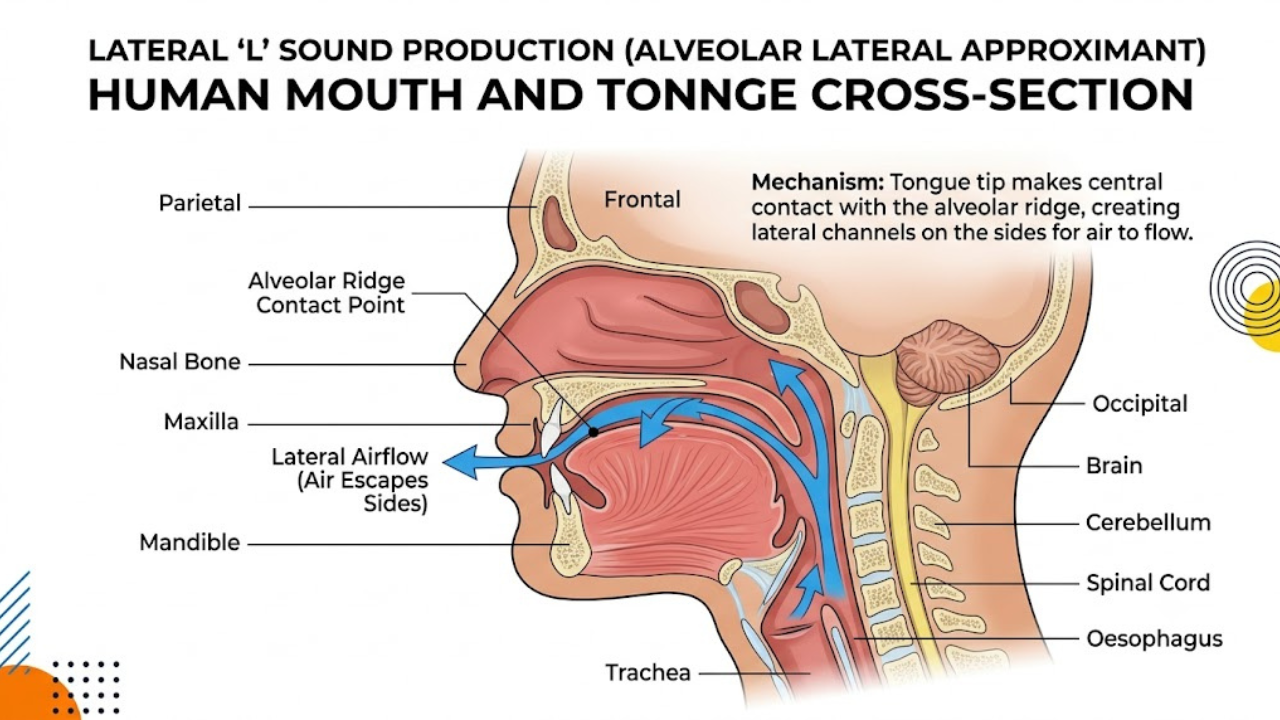
Introduction
Say the word “lateral” out loud. Now say “little.” Feel how your tongue touches the roof of your mouth just behind your teeth? That unique sound you’re making is a lateral consonant—one of the most common yet misunderstood sounds in English.
Here’s a question: How many lateral consonant sounds do you think English has? Most people guess one. The answer might surprise you.
In this guide, you’ll learn everything about lateral consonants—from the basic definition and examples to how they work in everyday speech. Whether you’re a linguistics student, an ESL learner, or just curious about how your mouth creates sounds, this article breaks it all down.
Table of Contents
-
What Are Lateral Consonants? A Clear Introduction
-
Why Do Lateral Consonants Matter? Key Benefits
-
Lateral Consonants — Key Facts, Types, and How They Work
-
How To Pronounce and Identify Lateral Consonants
-
Common Mistakes and Myths About Lateral Consonants
-
Expert Tips for Mastering Lateral Consonants
-
Frequently Asked Questions
What Are Lateral Consonants? A Clear Introduction
A lateral consonant is a speech sound produced by blocking the airflow through the middle of your mouth and allowing it to escape along one or both sides of your tongue.
Think of your tongue as a dam. When you make a lateral consonant, the dam blocks the center channel, so the air flows around the sides instead. That’s why they’re called “lateral”—from the Latin latus, meaning “side.”
The most famous lateral consonant example is the English “L” sound, as in the word “Larry“. When you say “L,” your tongue tip presses against the alveolar ridge (the bumpy area just behind your upper teeth). Air can’t escape through the middle, so it flows out over the sides of your tongue.
Here’s an analogy: Imagine water flowing through a river. If you place a rock in the middle, the water splits and flows around both sides. Your tongue is the rock; the air is the water. That side-flow is what makes a lateral consonant different from a central consonant, where air flows straight down the middle.
Why Do Lateral Consonants Matter? Key Benefits
Understanding lateral consonants gives you real advantages in language learning and communication.
-
They’re essential for clear speech. The English “L” sound is one of the most frequently used consonants. Mispronouncing it can make you sound unclear or even change word meanings.
-
They distinguish words. “Light” and “right” differ only by the lateral consonant /l/ versus the central /r/. Getting this right prevents confusion.
-
They appear across languages. Over 50% of the world’s languages have at least one lateral consonant. Learning them helps you pick up new languages faster.
-
They develop critical listening skills. Training your ear to hear the difference between lateral and central consonants improves overall phonological awareness.
-
They connect to reading and spelling. English spelling reflects lateral consonant sounds in patterns like “ll” and “l” before consonants. Understanding this helps with literacy.
-
They’re a gateway to phonetics. Mastering lateral consonants gives you a foundation for understanding all consonant types—plosives, fricatives, nasals, and more.
Lateral Consonants — Key Facts, Types, and How They Work
Types of Lateral Consonants
Lateral consonants come in several varieties, depending on how they’re produced.
Lateral Approximants
These are the most common lateral consonants. The articulator approaches another part of the mouth but doesn’t create enough constriction to cause turbulence. The English “L” is a lateral approximant.
Lateral Fricatives
In these lateral consonants, the side channels are narrowed enough to create audible friction. The Welsh “ll” sound (as in Llanfair) is a voiceless lateral fricative.
Lateral Affricates
These combine a stop closure with a lateral release. The tongue blocks airflow completely, then releases it laterally. Some African languages use these sounds.
Lateral Flaps
Rarer lateral consonants where the tongue briefly taps the alveolar ridge while air flows laterally. Australian Aboriginal languages like Iwaidja feature these.
Lateral Consonants in English
English has one lateral phoneme: the lateral approximant /l/. But here’s the twist—it has two distinct allophones (variations):
| Allophone | Symbol | When It Appears | Example |
|---|---|---|---|
| Clear L | [l] | Before vowels | “lady,” “fly” |
| Dark L | [ɫ] | Before consonants or word-finally | “bold,” “tell” |
The clear L has a “neutral” tongue position. The dark L involves raising the back of the tongue, giving it a slightly “u”-like resonance.
Some dialects also feature a devoiced L [l̥] after voiceless consonants, as in “play”. That means some English varieties have three distinct lateral sounds.
How To Pronounce and Identify Lateral Consonants
Follow these steps to master lateral consonants in your own speech.
Step 1: Find the alveolar ridge. Run your tongue along the roof of your mouth until you feel the bumpy ridge just behind your upper teeth. That’s your target spot.
Step 2: Position your tongue tip. Press the tip of your tongue firmly against that ridge. Keep the rest of your tongue relaxed and flat.
Step 3: Block the center. Your tongue tip should completely block airflow through the middle of your mouth. No air should escape straight forward.
Step 4: Release air sideways. Breathe out gently. The air should flow around the sides of your tongue. You should feel a slight breeze on both cheeks.
Step 5: Add voicing. For the English “L,” vibrate your vocal cords while producing the sound. You’ll feel vibration in your throat.
Step 6: Practice clear vs. dark L. Say “leaf” (clear L—tongue forward). Then say “feel” (dark L—tongue back). Notice the difference in tongue position and sound quality.
Step 7: Record and compare. Record yourself saying minimal pairs like “light” vs. “right” or “lap” vs. “rap.” Listen for the lateral airflow.
Common Mistakes and Myths About Lateral Consonants
Myth: English has only one lateral consonant sound.
Truth: English has one lateral phoneme /l/, but it has multiple allophones. The clear L [l] and dark L [ɫ] are distinct sounds, and some dialects add a devoiced L [l̥].
Mistake: Confusing lateral with liquid.
Truth: “Liquid” is a broader category that includes both lateral consonants (like /l/) and rhotics (like /r/). All lateral consonants are liquids, but not all liquids are lateral.
Myth: Lateral consonants always involve both sides of the tongue.
Truth: Air can flow along one or both sides of the tongue. Some languages have unilateral laterals where air escapes only on one side.
Mistake: Thinking plosives can be lateral.
Truth: Plosives are never lateral. The distinction doesn’t apply to nasal stops either, since airflow through the nose bypasses the tongue entirely.
Myth: All L-sounds are lateral.
Truth: In some languages, the letter “l” represents a central consonant, not a lateral one. Always check the phonetic transcription, not the spelling.
Expert Tips for Mastering Lateral Consonants
Tip 1: Mirror practice. Watch your mouth in a mirror as you produce lateral consonants. You should see your tongue tip pressed against the alveolar ridge.
Tip 2: Feel the sides. Place your fingers lightly on your cheeks. You should feel the vibration of air escaping laterally when you produce a proper lateral consonant.
Tip 3: Minimal pair drills. Practice pairs like “light/right,” “lap/rap,” and “climb/crime” daily to train your ear and mouth.
Tip 4: Slow down. Exaggerate the lateral consonant in words like “little” and “lellow.” Hold the sound for a full second to feel the lateral airflow.
Tip 5: Learn IPA symbols. Familiarize yourself with [l], [ɫ], and [l̥]. Knowing the symbols helps you read pronunciation guides in dictionaries.
Frequently Asked Questions
What is an example of a lateral consonant?
The most common example is the English “L” sound, as in “Larry” or “lip“. When you say these words, air flows over the sides of your tongue because the center is blocked.
What are central and lateral consonants?
Central consonants allow air to flow through the middle of the mouth. Examples include /s/, /z/, and /r/. Lateral consonants block the center and release air along the sides. The difference is all about where the air goes.
How many lateral sounds are there in English?
English has one lateral phoneme /l/, but it appears as multiple allophones. Most dialects have two—clear [l] and dark [ɫ]—while some have three, adding devoiced [l̥].
Conclusion
Let’s recap the three most important things you’ve learned about lateral consonants.
First, a lateral consonant is any sound where airflow escapes along the sides of the tongue, not through the middle. The English “L” is the classic example.
Second, English has one lateral phoneme but multiple allophones—clear L before vowels, dark L before consonants or at word ends. Some dialects add a third variation.
Third, mastering lateral consonants improves your pronunciation, listening skills, and ability to learn other languages. The difference between “light” and “right” depends entirely on getting this right.
Start today. Pick five words with “L” in different positions—leaf, milk, tell, play, yellow—and practice each one slowly. Feel the lateral airflow.
Which lateral consonant variation gives you the most trouble—clear L, dark L, or something else? Drop your answer in the comments below.